
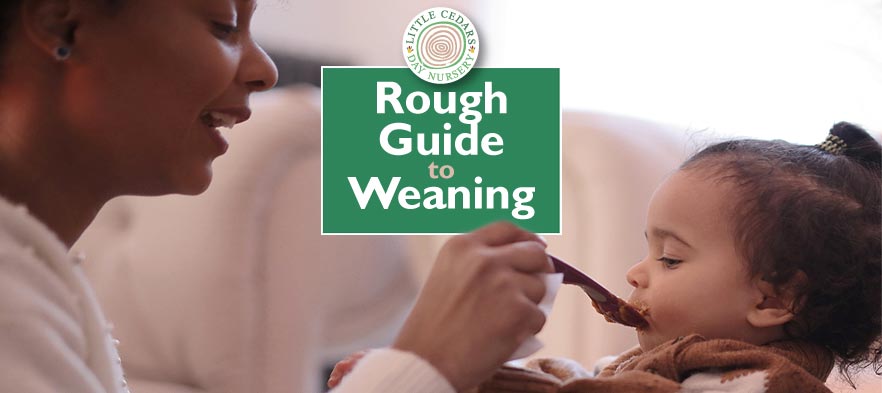
The Cambridge Dictionary defines weaning as “the act or process of causing a baby or young animal to stop feeding on its mother’s milk and to start eating other food.” It’s all about babies moving from a liquid, milk-only diet to a more varied diet that includes “solid” foods (albeit usually mashed or blended initially).  Also known as complementary feeding, weaning is an important milestone for any parent or baby and usually occurs when the baby reaches the age of about 6 months. Sometimes babies simply tire of milk and weaning thereby comes naturally. In other cases, a baby needs a bit more encouragement to make their transition towards solids. Here, we’ll explore the whole topic of weaning in more detail, including ways parents can help to make the transition smoothly and stress-free for all parties.
How to Help the Weaning Process
First off, parents must realise that weaning is a gradual process i.e. there is a period of overlap where baby continues to drink milk and starts eating other foods. Usually, he or she will gradually eat a greater proportion of solids and less and less milk as time goes by, as opposed to suddenly changing from one to the other in one huge leap. So, weaning is a process, not a single step.
Moving to solid food can be exciting, surprising, confusing, hideous or anything in between for the baby. The world of textured food and new flavours is a whole new experience for baby; each mouthful can represent an explosion of new flavours, textures and adventure. This can be wonderful, or sometimes troubling to the child, depending on the individual and, of course, the tastes and textures involved. Therefore, starting slowly with tiny steps is fine; it’s OK if the baby does not want to eat much at first. They’ll gradually catch on as they get used to this brand new concept.
It’s OK if the baby does not want to eat much solid food at first. They’ll gradually catch on as they get used to this brand new concept.
 Weaning should be fun and it’s also the only time in a child’s life where they won’t have any preconceived ideas about what foods they “do or don’t like”. So, parents can experiment, within reason of course. It’s a time when introducing new foods to the baby comes naturally once the baby has caught on to the idea of this new experience.
Remember that the baby will take a few tries before they perfect the art of eating solid foods, so they may unwittingly push some food out again at first. Until now, they have only been used to breastfeeding or drinking from a bottle, so pushing food out their mouths initially may not mean that they don’t like what you’re feeding them. Give it another try. You’ll be able to ‘read’ their facial expressions anyway. Those are the real giveaway as to whether they enjoy a particular food, or find it repulsive. Their reactions can also be the cause of much laughter!
Tips For Weaning Success
There are several additional things parents can do to make weaning a success. Here are a few tips:
 Don’t rush it; set aside some time with baby so it’s relaxed, otherwise everyone can get stressed, especially initially.
- Don’t try to wean them off breast milk too soon either. It’s the very best food for them during their first 6 months, for sure. You can learn more in our separate article all about the benefits of breastfeeding for both baby and mother.
- Don’t try to wean your baby until it’s physiologically ready. That means they need to be able to hold their own head up when in a seated position, they need to be able to swallow food successfully and they need to have good coordination between eyes, hands and mouth.
- Is baby tired? Don’t try introducing them to solid foods right now if so. Wait until they’re wide awake and full of energy otherwise they simply won’t want to cooperate.
- Purée (i.e. finely blend or mash) the foods, mashing them particularly well at the start of the weaning process. That way the solid foods are more like liquids, so will be less of a surprise to the baby bearing in mind they’ve only had milk up until this point. Try mashing ripe apples, bananas, pears and other soft fruits, then feeding them to baby with a weaning teaspoon (these are softer and more gentle in babies’ mouths). Try mashing cooked vegetables too, for example cauliflower, potato, broccoli, spinach, sweet potato, carrots and so on. Suitably cooled down for safety, of course. All of these can make a very good purée that’ll slip down easily if the baby warms to the taste.
- Offer baby just a little initially. They’ll soon let you know if they would like more. If they’re not convinced, demonstrate yourself eating a little bit and showing that you’re enjoying it.
- Initially, you can follow a little bit of food up with a milk feed. This is a great way to introduce them slowly to solids.
- Once they’re taking food from you, help them feed themselves either by hand or with a teaspoon (let them copy you). The skill of feeding themselves sometimes comes quite quickly but for others it can take more time.
- Don’t worry if baby makes a mess. It’s natural at first and not something they should concentrate on initially. The important part is that the baby is beginning to try new foods, so you don’t want to distract from that. Coaching baby to be more tidy with their eating can come a bit later, after they’ve mastered the process of eating purées, mashed food and perhaps gone on to more solid food. A clean, plastic or pelican bib will help in the interim.
- You can later move on to whole, (adult) finger-sized pieces of very soft fruits that baby can learn to hold. However, do read the Health & Safety Considerations section below before moving to un-mashed foods.
- Remember that babies may need to taste new foods multiple times before they accept them, so don’t give up if they first reject them. Try again another time and don’t ever force them to eat. If they turn their head away or clamp their mouth shut, they’ve had enough for now.
- Avoid distractions for the baby at feeding times. So, remove phones, tablets, computers, toys and TVs at meal times. The baby needs to concentrate during this new eating experience.
- Don’t expect a regular pattern; sometimes babies will eat more, other times less. A milk bottle will, for many, represent a comforter as well as a source of sustenance, so don’t be surprised if they prefer milk to solids when they’re feeling under-par or tired.
 Don’t rush it; set aside some time with baby so it’s relaxed, otherwise everyone can get stressed, especially initially.
 You can later move on to whole, (adult) finger-sized pieces of very soft fruits that baby can learn to hold. However, do read the Health & Safety Considerations section below before moving to un-mashed foods.
Huge care needs to be taken to avoid giving infants anything that’s going to represent a potential choking hazard.
Health & Safety Considerations
- It goes without saying that food should be given to babies and infants at a suitable temperature. So, ensure that boiled vegetables, for example, are sufficiently cooled. Try them first yourself to make sure.
- Huge care needs to be taken to avoid giving infants anything that’s going to represent a potential choking hazard. Whole grapes, cherry tomatoes or anything else of a similar size would be examples of this as they are perfectly sized to block a baby’s airway if not first chopped up. Also avoid anything hard like nuts, raw vegetables or un-mashed apple and ensure that any pips/seeds/stones are removed from fruit and bones are removed from fish or meat.
- Close adult supervision is always needed when infants are eating, particularly when they’re in the weaning process and don’t yet fully know what they’re doing.
- Consult your GP or health visitor about weaning if your child was born prematurely.
- Don’t add extra sugar or salt to your baby’s food, including during the cooking process. Avoid salty foods because salt is dangerous to babies. Avoid sugar because it can lead to a sweet tooth and that has many negative implications including tooth decay, weight issues, etc.
- Food hygiene is, of course, essential during food preparation and while the child is eating. So ensure that hands, faces, plates, spoons, cups and surfaces (etc.) are clean.
- Part of that is ensuring that the food itself is hygienic so, for example, fruit and vegetables must be washed. If serving raw fruit/veg, ensure they’re also peeled. If using eggs within baby foods, ensure they are stamped with the red ‘British Lion Code of Practice’ lion (to denote a low salmonella risk) and it’s safest if they are never served raw.
- As babies are weaned off breast or formula milk, parents need to ensure that they are still benefiting from a balanced and varied diet. That’s true whether they are being brought up as meat eaters, vegetarians or vegans. Additional supplements may need to be considered for vegan diets, which may be low in vitamin B12, for example. GPs, health professionals and/or dieticians should certainly be consulted for advice before deciding to cut out dairy products from children’s diets, including milk once they are no longer taking breast milk or the recommended infant formula milk alternative up to the age of one. The NHS has more information about vegetarian and vegan diets for children here.
- The NHS recommends that children aged between 6 months and 5 years of age take suitable Vitamin A, C and D supplements daily although babies drinking at least a pint of ‘first infant formula’ milk do not need the supplements as they’re included in the milk already.
- Extreme care is needed by parents in relation to possible allergens. For this reason, it’s best to introduce only tiny amounts of possible allergens in the first instance, one at a time, so any adverse reaction can be spotted early. After all, this is the first time the baby is going to have eaten these new foods. The most common allergens are nuts, eggs, gluten, fish and cows’ milk. If in doubt or concerned about allergic reactions, consult your health worker or GP and, of course, call an ambulance immediately if your baby does have an adverse reaction to anything.
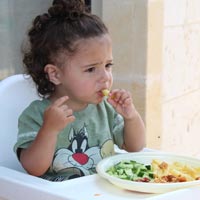 Huge care needs to be taken to avoid giving infants anything that’s going to represent a potential choking hazard. Whole grapes, cherry tomatoes or anything else of a similar size would be examples of this as they are perfectly sized to block a baby’s airway if not first chopped up. Also avoid anything hard like nuts, raw vegetables or un-mashed apple and ensure that any pips/seeds/stones are removed from fruit and bones are removed from fish or meat.
Going Forwards
By the age of 7 to 12 months, most babies will have transitioned to taking in 3 meals a day, along with their milk perhaps 4 times a day (reducing to 3 times a day at a year old). The ratio of solids to milk will then gradually decrease as the weeks go by. By the time they’re 12 months or older, they can also have two healthy snacks between meals.
 Always try to maintain a varied diet for the infant, so they get all the vitamins and nutrients they need as they intake less and less milk. Ensure the foods contain sufficient iron, which can be sought from fortified cereal, fish, milk, dark green vegetables, lentils and beans. Giving them finger foods to hold and eat themselves is a great way to encourage them to feed themselves (under supervision, of course). As they grow older they can be encouraged to eat at the family table with parents/siblings and eventually upskill to using cutlery, along with eventually learning the rules around good table manners etc.
We hope that you found our Rough Guide to Weaning useful. If so, please do feel free to share it on social media (copy this link) or to bookmark it for future reference.
A Streatham Nursery, Near Furzedown, Tooting & Balham
 Little Cedars is a high quality pre-school and nursery in Streatham. If you’re looking for nurseries near Furzedown, Tooting or Balham, it’s very close by, so may also suit you if you live or work in those areas. To find out more about the nursery and the high quality childcare on offer for babies and children up to 5, please get in touch using one of the buttons below.

 The EYFS framework sets the statutory approach required for pretty much every aspect of early years childcare and education provision in the UK. The standards cover the learning and development programmes, learning goals, approach to assessment, safeguarding, welfare of children, staffing, and much more. In this guide, however, we’ll focus purely on the 7 key areas of learning and development covered by the EYFS. Essentially, these form the core curriculum at nurseries like Little Cedars Nursery in Streatham. Let’s take a look …
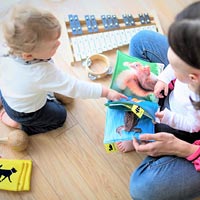 It would be hard to overstate the importance of good communication and language skills, as they underpin early years progress in just about everything else. So, early years providers like Little Cedars encourage two-way interactions and language-rich communications between staff and children right from the outset. Childcare professionals will introduce new vocabulary regularly and help children to understand it and use it themselves through activities like story-telling, role play and question-and-answer sessions. Practitioners will regularly read with (not just to) children, using a wide variety of high quality reading materials, encouraging feedback and engagement from the children as they progress. In this way, new vocabulary is embedded, conversations come naturally and children will thrive in their language and communication skills.
 Physical development is, of course, another key skill that is foundational for children. After all, it impacts on health, mobility, strength, fitness, agility, coordination, wellbeing and general happiness. So, great care is taken at nurseries like Little Cedars to help children hone their physical skills and development incrementally, to improve all of the above. This is done through the EYFS programmes that are set and customised for each individual child. Skills like balance, gross and fine motor skills, coordination, spatial awareness, hand/eye coordination, strength and agility will therefore gradually improve and become second nature to each child as they grow. Active children will generally become more healthy children. They will also improve social skills and confidence through the activities that they participate in alongside peers. It is also, of course, great fun!
 Health, happiness and even the development of early years cognitive function are all underpinned by children’s personal, social and emotional development (‘PSED’). Indeed, PSED forms the backbone of children’s relationships to all adults and peers around them — and also governs how they feel they fit in. That’s all incredibly important, so childcare settings like Little Cedars Nursery approach PSED as a ‘prime’ element within the EYFS curriculum. The result is that children are supported and support one another, they learn how to manage emotions and behaviours, how to eat healthy diets, look after themselves physically, and independently manage their own personal needs. All of this will have the knock-on effect of improving confidence and self-esteem and even allow them to set some of their own goals. Close bonds will be made with both staff and other children and conflicts will be more easily resolved peaceably.
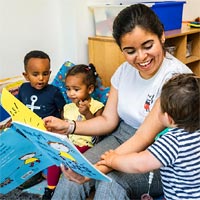 Reading and writing are crucial elements within every child’s education. Without these skills, learning about other topics would become much more difficult. Literacy is therefore a key area of focus within the EYFS learning and development framework. Like other nurseries, pre-schools and childcare settings that adhere to the EYFS approach, Little Cedars Nursery will therefore endeavour to encourage a love of reading within every child. Reading teaches children to comprehend language, vocabulary, grammar and spelling as well as learning more about the underlying topics themselves.
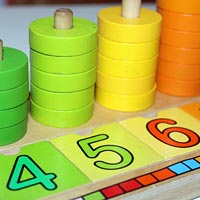 Nurseries, pre-schools, kindergartens and other childcare settings also recognise the importance of mathematics within children’s learning and development. The EYFS curriculum caters well for this, encouraging early years professionals to help children master counting first to 10 and later to 20 and beyond. Children will learn the patterns around numbers, including recognition of odd and even numbers, along with skills like simple addition and subtraction, and the ability to recognise low quantities without having to count. They will also learn to recognise when one quantity is more than, less than or equal to another. In so doing, children will also learn the vocabulary around mathematics in readiness for school once they leave their early years setting.
 A good early years education is nothing unless children understand the world around them. The EYFS framework used by early years nurseries like Little Cedars builds in programmes to help children learn more about the world. This includes helping them to learn how to observe, recognise, describe and even draw what’s immediately around them as well as exposing them to environments like the natural world, local parks and museums. It even teaches them to recognise similarities and differences between other cultures, religions and communities in the UK and lives being lived abroad. They will get to know more about people’s roles in society too, for example through visits from police officers, firefighters and nurses. A broad range of written material (both fiction and non-fiction) will inform them further. Topics explored will touch on culture, technology, ecology, religion, community, nature and much, much more. This will enrich their knowledge and understanding of the world they live within, giving context to what they see, hear and read about as they grow older.
 Expressive arts and design are also integral elements within the EYFS curriculum. Early years childcare settings like Little Cedars ensure that children are given a wide range of opportunities to be creative and to free their imaginations. A huge variety of media, materials, tools and activities can be used by children to express themselves and communicate both visually and audibly. Colour, texture, form and function are explored along with opportunities for role play, story-telling, poetry, singing, performance and even dancing when appropriate.
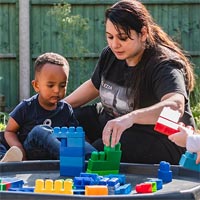 Little Cedars Nursery (Streatham) uses the EYFS framework to shape the educational activities and programmes that babies and children experience at the nursery. Part of this includes the setting of learning goals that each child needs to work towards as they gradually approach the age of 5, when they will move on to school. These are individual goals, tailored to the unique needs, interests, abilities – and any disabilities – of each individual child. A continuous regime of assessment will be undertaken by staff to monitor each child’s progress during their time with the nursery, with the learning programme adjusted, as necessary, along the way. A ‘Key Person’, allocated to each child, facilitates that assessment proactively. Additionally, staff will regularly engage with parents or carers/guardians to ensure that progress towards the learning and development goals is continued at home, wherever possible. Progress is communicated and a learning journal retained and available to parents at any time. In this way, each child achieves personal bests in all areas and everyone is kept up-to-date with the child’s progress.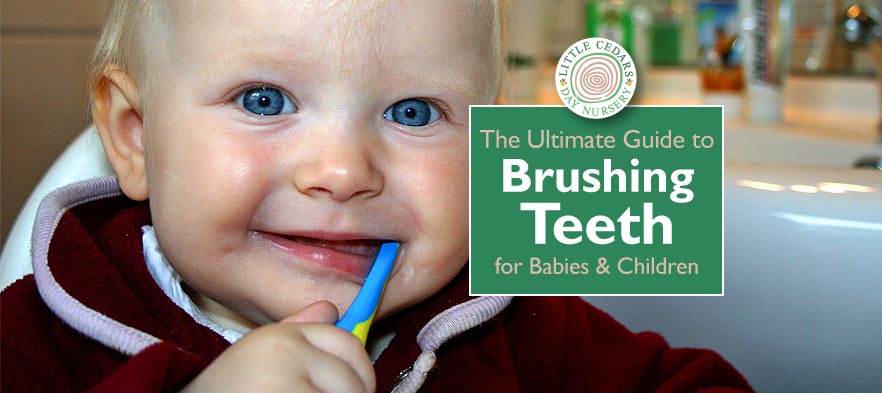


 It’s important to get children used to visiting the dentist and for this to be a positive experience. Dentists can highlight any potential problems early on and regular visits will also ensure that children realise the importance of teeth cleaning and oral hygiene as they grow. Starting early is also more like to avoid the possibility of them being nervous about visiting the dentist (if you are nervous yourself, try not to let this show as it could project the fear onto your child). NHS dental treatment is free for UK children.
  Sugar and tooth decay go hand-in-hand, especially if too much sugar is in the diet and/or if toothbrushing isn’t regular and thorough. The amount of potential decay is also made worse the longer sugar stays on the teeth. Cutting down on sugar intake will help limit the problem, as will a good tooth brushing regime. Here’s what parents and carers of babies and young children can do:
 Getting the approach right means healthier teeth and gums, fresher breath, better looking teeth, more self-confidence and potentially better health overall as the child grows up. Setting good teeth cleaning and tooth hygiene habits early on means children are more likely to continue the good work as they grow into adulthood. This includes regular, fear-free visits to the dentist for check-ups.
 A Convenient Nursery Location
 Compatible Opening Hours
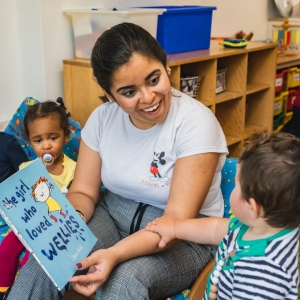 Visit the Nurseries & Ask Questions
 Nursery Security & Safeguarding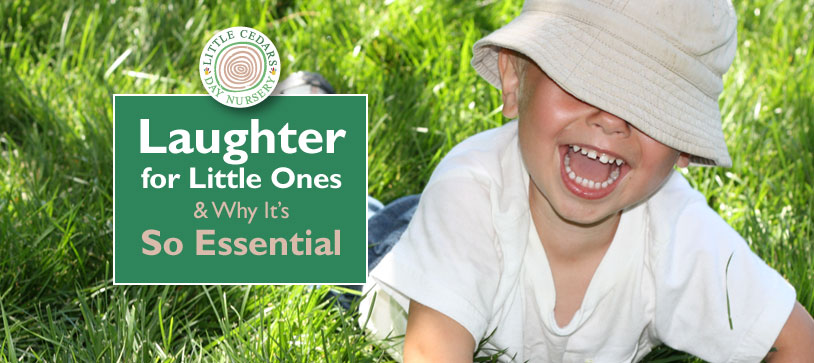
 Let’s first go back to the beginning. A sense of humour is apparently a learned aspect of a person’s character, to a fair extent. It’s something that develops and changes as a child gets older, rather than something they’re born with as a result of their DNA. As such, it’s important that babies and young children are given every opportunity to enjoy laughter and, while doing so, have fun with those around them. Laughing also is also closely linked to happiness, and being happy is, of course, priceless.
 Laughing helps children to develop better self-esteem;
 Improves mental health;
 The staff at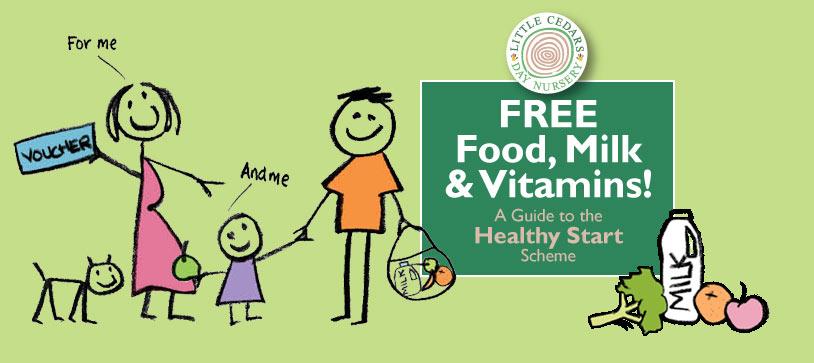
 Are you pregnant, or a parent with a child under four? If so, your family may be eligible for free healthy food, milk and vitamin supplements. In England, some of these free items are available under the ‘Healthy Start’ scheme, which we’ll explain in this quick-start guide.
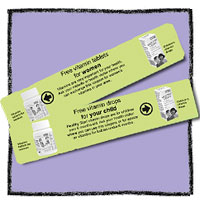 Eligible individuals can get the following, absolutely free:
 The infant formula milk:
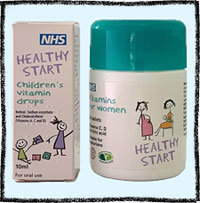 These free vitamin supplements are important for pregnant women, breastfeeding mums, babies and young children because many are deficient in them at this stage in their lives.
 In order to be eligible for Healthy Start vouchers, you need:


 These are significant benefits, so high quality sleep — and the right amount — is incredibly important.
 ‘Sleep Hygiene‘ is a term that refers to the whole routine around bedtime and sleeping, including important preparation measures during the run-up to bedtime A good sleep hygiene regime will help children get to sleep and to sleep soundly.
 The biggest message is that setting up — and sticking to — a set bedtime routine will greatly help with the quality of your child’s sleep. It sets a pattern that their minds and bodies will become used to naturally. A regime of this nature can include winding-down activities like a warm bath or shower, a peaceful book-reading session, dimmed lights and so on in the approach to bedtime. The routine will prepare them automatically for sleep even during the run-up to actually sleeping.
 At Little Cedars Day Nursery in Streatham, we understand the importance of sleep, particularly for babies and the youngest of the children. For that reason, we ensure that children have the opportunity of a nap both in the morning and in the afternoon. For example, babies sleep for about half an hour to an hour around 9.30am and then again after lunch, for 1 to 2 hours between about 1pm and 3pm. Preschoolers don’t have to sleep if they don’t want to, but are given the opportunity to do so — every child is different. We also take a lead from parents who may prefer their child to keep to a particular sleep pattern. If you would like more information about this topic, and how we approach it at the nursery, please do get in touch.
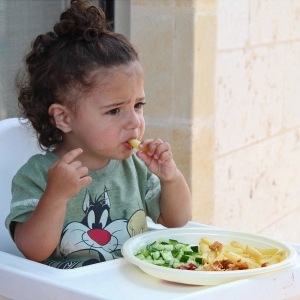
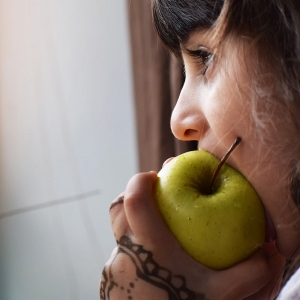 With families living busy lives these days, it’s not always easy to provide the very best nutritious meals for children. This is compounded by an abundance of ready meals and convenience food available in shops and advertised everywhere. However, healthy, balanced diets are incredibly important for children in their early years. Adopting a healthy diet early on can mean that some diseases associated with later life can be avoided. Healthy food also has other beneficial effects on growing children including sustained energy levels, improved cognitive activity, the evening out of a child’s moods, help with mental wellbeing and maintaining a healthy weight.
 Make sure you give the
 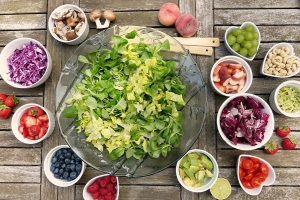 Childhood obesity is a growing problem in the UK, with nearly a third of children aged two to fifteen being overweight or obese. What’s more, data shows that children are becoming overweight at ever-earlier ages and are generally eating less fruit, vegetables, oily fish and fibre than is recommended. The lack of a varied diet will leave children lacking in some essential vitamins and minerals. This is all of major concern. Obesity alone can lead to health issues in later life such as diabetes, heart problems, high blood pressure and even cancer. It may also lead to bullying and self-consciousness which may adversely affect a child’s self-esteem and mental wellbeing.
 Welcome to our guide to free childcare available specifically via Universal Credit. This builds upon our previous childcare funding guides, giving parents yet another potential way to get financial help towards childcare costs. Which scheme suits you best rather depends upon your individual situation as each has its own rules for eligibility. If one scheme doesn’t fit with your situation, another may. You may even find that you can apply for multiple schemes in certain circumstances, and we’ll also touch upon that in this guide. (To view our previous guides on other funding schemes, see our
  To be potentially eligible for childcare help through Universal credit, you must live in the UK, be on a low income or out of work and be aged 18 or over (although there are some exceptions for 16 and 17 year olds). You and your partner, if you have one, must also be under State Pension age and have no more than £16,000 in savings/investments between you.
 If you have been offered new employment, you can ask for childcare costs for the month preceding the start of your new job. If you are coming to the end of your employment, you must inform the Department for Work and Pensions (‘DWP’) immediately. Help with childcare costs can be claimed at least a month after your employment ends to help you maintain childcare as you switch jobs.
 You can have more than one childcare provider. However, to apply for Government help with childcare you must use a registered/approved childcare provider. This generally means that the childcare provider is registered with Ofsted for England, The Care Inspectorate for Scotland or the
 The Tax-Free Childcare Scheme could save you thousands
 The Tax-Free Childcare Scheme is available to parents of children up to the age of 11 inclusive, or 16 inclusive if they’re disabled.
 Along with helping to fund nursery places at places like
  TIP: If you want the Government’s contribution to go into your account faster, your payment needs to be paid by Bank Transfer (rather than, say, via a debit card or standing order, although those still work fine if you don’t mind waiting a while longer for the Government’s corresponding contribution).