
 Families: get ready for World Wildlife Day! On 3rd March each year, we celebrate UN World Wildlife Day, an important event that is all about protecting nature’s flora and fauna. At nursery age, little ones are naturally curious and eager to learn more about the world around them. World Wildlife Day is therefore the perfect opportunity to inspire a greater love for nature and wildlife in our young. Exploring the wonders of plants, trees, and the animal kingdom teaches them more about the world and also helps children develop key skills like language, creativity, and empathy. Whether through outdoor play or wildlife-themed activities, engaging with nature’s wildlife can therefore create valuable early learning experiences. With that in mind, today’s post outlines some simple activities that children, including those under five*, can take part in to celebrate World Wildlife Day. We also highlight some of the benefits of nature to children towards the end of the post.
Wildlife-Themed Activities for Nursery Children
 Getting outdoors is the best way to see wildlife, especially if your family lives near a park or the countryside. Rambles, picnics, and simple walks are all obvious options and, of course, wildlife sanctuaries are a good choice if you have one nearby. That said, while such outdoor options are amongst the best ways for children to connect with nature, sometimes they’re simply not possible. However, when that’s the case, there are plenty of other possibilities including bringing the wonders of wildlife into your nursery, home, or garden. Here are some engaging, age-appropriate activities that will allow children to take part in World Wildlife Day whatever their circumstances:
Animal Mask Craft
Encourage little ones, under supervision, to make their favourite animal masks using paper plates, paint, and string. Children will love the finished result! What’s more, they are sure to take on the characters of animals once they wear their creations, for example, with a roar from behind a tiger mask. Not only does this activity spark creativity, but it also allows children to role-play, learn about different creatures, and immerse themselves in different imaginary scenarios.
Wildlife Art
 Most children naturally take to drawing, so encouraging them to draw wild animals, plants and birds will be a popular suggestion, especially around the time of World Wildlife Day. For example, they could try drawing British mammals like rabbits and squirrels, jungle animals like elephants and tigers, or sea creatures like dolphins and whales. To make it easier, perhaps give them some visual reference to inspire them. They could choose from a variety of media, be it pencils, crayons, paints, or collages — or something entirely different. Playdough or salt dough models are also an option. Children naturally love to create and, once complete, perhaps display their pieces to encourage future progress.
Wildlife Spotting
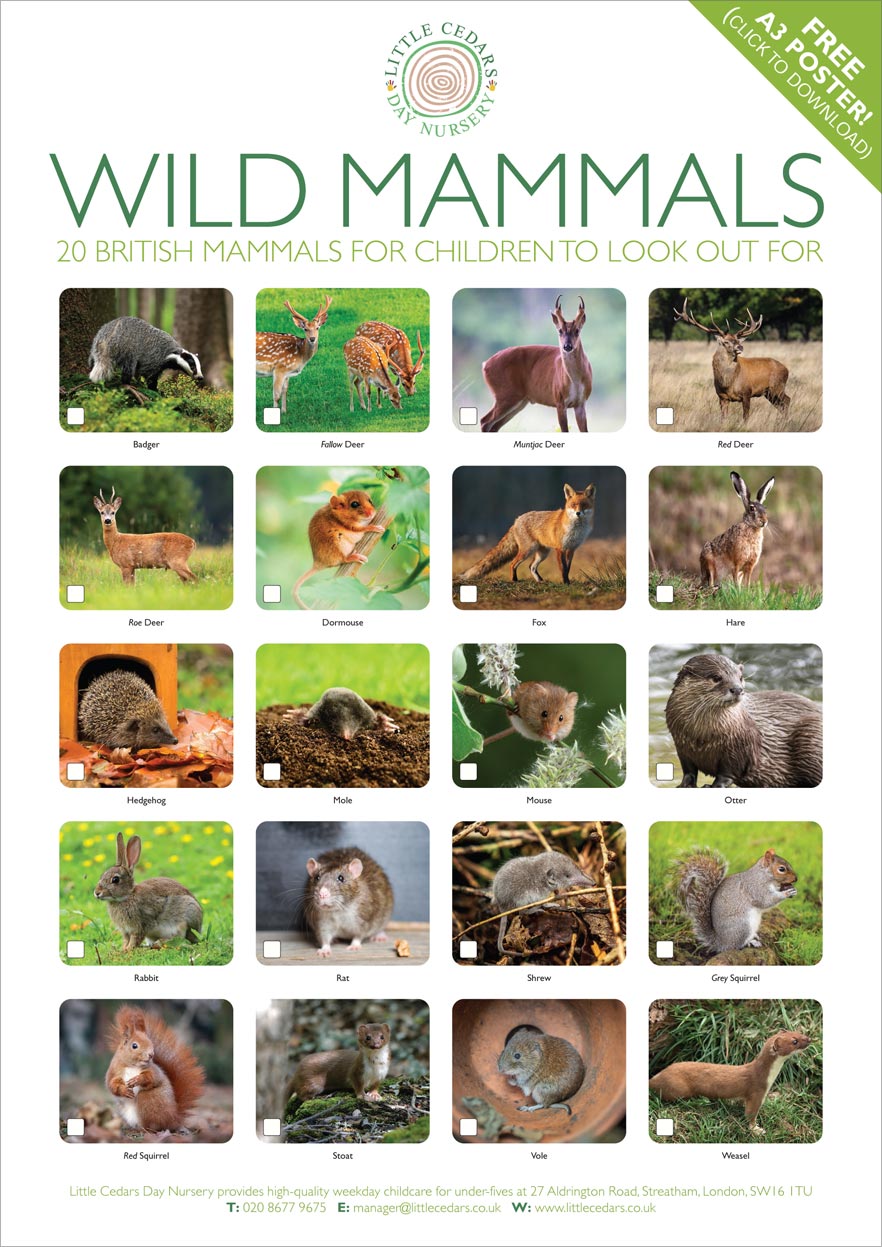
Wildlife is all around us, even in cities like London. From pigeons, robins, bats and urban foxes to ladybirds, millipedes and ants, there are lots of creatures to see if you know where to look. To help with such activities, check out our free, downloadable wildlife reference sheets. We have one for birds, another for mammals, one for minibeasts and a lovely one for butterflies. They’re all totally free – simply download and print.
Wildlife Story Time
 Reading books about wildlife will introduce children to new animals and habitats. Great options for younger under-fives include ‘Dear Zoo’ by Rod Campbell and ‘Brown Bear, Brown Bear, What Do You See?’ by Bill Martin Jr. (author) and Eric Carle (illustrator). Also, of course, children and families have the option to tell each other made-up stories. They’re a great way to encourage creative thinking and can be approached in a number of different ways. For example, a parent could tell a story first to give the child an idea of how to approach storytelling, or one family member could start the story and then another could make up the next part and so on. In this way, the story would evolve in surprising and unpredictable ways!
Bird Feeder Fun
 Try making some simple bird feeders with your children. There are lots of easy ways to make them as outlined in our dedicated guide, bird feeder ideas for children. Hanging these outside allows children to observe birds up close and learn to recognise different species. What’s more, children will adore it when birds come to visit their creations. That said, teach children to be patient; birds can take a while before they begin to trust anything new.
Animal Yoga
Turn movement into learning by encouraging children to mimic animal movements. For example, they can hop like a frog, prowl like a cat, bounce like a kangaroo, or try to slither like a snake. Such activities will be fun and help them develop strength, coordination, and body awareness.
Nature Scavenger Hunts
 Create a simple scavenger hunt using pictures, words, or our free nature hunt sheets to encourage children to find different natural objects like leaves, feathers, and pine cones. This activity builds children’s observation skills, gives them deep insights into nature, and instils in them a better appreciation for the environment. Currently, free reference sheets are available for an autumn nature hunt, a winter nature hunt, and a leaves scavenger hunt. Also check out our Exploring Spring with Under-5s activity idea, which is a similar concept (new reference sheet to follow later this year).
Sensory Nature Play
Fill a tray with natural materials like leaves, pine cones, wheat ears, and sand, and let age-appropriate children explore the different textures. You could even play a game where they close their eyes and try to guess what they’re touching. This hands-on experience aids sensory development and fine motor skills while also encouraging children to appreciate the finer details of natural things.
Wildlife-Themed Songs and Rhymes
Another simple way for under-fives to celebrate World Wildlife Day is to sing songs and rhymes about animals. Examples include 5 Little Ducks Go Swimming One Day, Incy Wincy Spider, Baa Baa Black Sheep, Mary Had a Little Lamb and Old MacDonald Had a Farm. This activity helps reinforce language development and introduces children to different wildlife in a fun and engaging way.
Simple Science with Plants
 Engage children with easy science experiments, like planting seeds and watching them grow or observing how water moves through a flower’s stem using food colouring. Such activities are fascinating for children and help them understand basic biological concepts in an interactive way.
The Benefits of Connecting Young Children with Nature
 Spending time in nature or learning about wildlife isn’t just fun—it has incredible benefits for early childhood development. To harness such benefits, families can incorporate nature-based learning into children’s routines in a variety of ways. Examples include organising outdoor exploration sessions, setting up small wildlife observation areas, and using nature-themed storytelling to engage the young learners. Connecting children with nature:
- Encourages curiosity and creativity. For example, observing bugs, leaves, or birds encourages children to ask questions and think creatively about the world around them.
- Supports language development. For example, talking about animals, their sounds, and habitats helps build new vocabulary and boosts communication skills.
- Enhances emotional well-being. For example, research shows that spending time in nature reduces stress and promotes calmness, even in young children.
- Teaches empathy and responsibility. For example, caring for plants, feeding birds, or learning about endangered animals helps children understand their needs more deeply and encourages greater kindness towards living things.
- Benefits children academically. For example, in studies, even just a view of green outdoor space has been shown to boost academic performance.
These are just a few of the many benefits that spending time in and around nature has for children. Learn more about the importance of nature and its many benefits to children here.
Make Wildlife a Natural Part of Children’s Lives
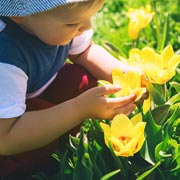 Incorporating wildlife into children’s activities doesn’t have to be limited to one day. Encouraging youngsters to notice the birds in the garden, look for insects on nature walks, or watch the changing seasons can gift them a lifelong love of nature. Parents and families can make wildlife observation a regular habit, perhaps by keeping a simple nature sketchbook where children can draw or glue in pictures of what they see, or by creating a wildlife corner at home with books, nature finds, and small child-safe plants. Even setting up a bird-watching station near a window can turn everyday moments into exciting learning opportunities. By celebrating World Wildlife Day, we can inspire the next generation of nature lovers—one little explorer at a time!
Children Love Nature at Little Cedars Nursery, Streatham

 At Little Cedars Nursery in Streatham, we love helping children connect more deeply with nature — we understand how important it is to their learning and development. As well as having natural, open, spaces nearby, children also get to enjoy and learn from the nursery’s plant and vegetable area. There, they can nurture plants as well as harvest their own nursery-grown vegetables. They love seeing the fruits (and vegetables!) of their labour and it gives them an enormous feeling of achievement. In addition, such nature-based nursery activities teach children valuable lessons about empathy, responsibility, cause and effect, how their efforts can be rewarded, where food comes from, and the circle of life. It’s all just one small part of the wider early years education that children receive at Little Cedars Nursery.
If you are considering a possible nursery place for your baby or child at Little Cedars Day Nursery, Streatham, please get in touch:
Little Cedars Nursery is a wonderful nursery in Streatham, London SW16. The high-quality setting supports free childcare for eligible children under five and babies as young as 9 months. It is rated as a Good Provider by Ofsted. As well as serving Streatham families, the setting may also be a convenient choice for families from Tooting, Furzedown, Balham, Norbury and Colliers Wood.
* Children, especially the young, should be supervised appropriately by a responsible adult. Also, check out our safety tips for outdoor play.
 As promised in our last post we now extend our
  One of the key things that pollinators like bees need is something to drink, particularly when the weather is hot. They expend a lot of energy buzzing about and can easily become exhausted without a source of water. So, a simple thing that children and families can do is to put out some small, shallow dishes of water among any flowers (whether in flowerbeds or flowerpots). The little drip trays that you put under flowerpots are perfect but any small, shallow dish will do. A critically important detail is that a ‘landing stone’ should be placed into the water so that the bees have somewhere safe to land above the level of the water’s surface.
 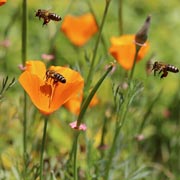 Bees, hoverflies, butterflies and all pollinators also need nectar as a food source. For our children, that means that flowers — and their pollen — are the key to attracting them. So, with adult supervision, children can sow pollinator-attracting flowers from things like poppy seeds and wildflower seed mixes. These are readily available commercially, are usually marked on the packets as pollinator-friendly, and are usually very inexpensive. They’re also easy to grow (see our
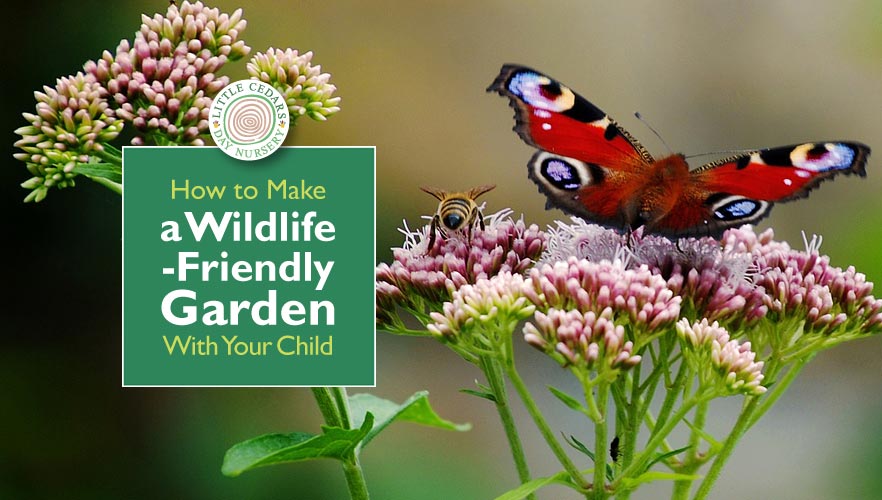
 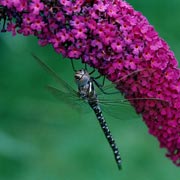 As we mentioned above, butterflies will be attracted to flowers like poppies and wildflowers. However, they absolutely love flowering Buddleia (right) and Hylotelephium (a.k.a. ‘Ice Plant’ – see main image at top), especially if they’re located in a sunny position. On a good day, children may find such plants absolutely covered with visiting butterflies and other pollinators — and these creatures are a delight for little ones and adults alike. Note, though, that parents will need to hard prune most Buddleia varieties in early Spring, otherwise, they can grow quite large. If space is limited, therefore, stick with poppies, wildflowers, and ice plants rather than buddleia.
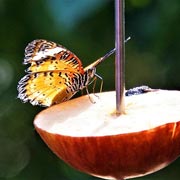 As well as enjoying the nectar from the flowers that children have planted (see above), butterflies can also be lured to children’s gardens through a kind of drink that’s also food for them. For butterflies, children simply mix up to four parts of warmed water with one part of sugar. Stir until the sugar has dissolved. Children can then drizzle the sweet solution over small slices of ripe fruit or even small cut-up pieces of a clean sponge. As with the water for the bees, these can then be placed in shallow dishes and left among flowerbeds or alongside flowerpots on a balcony or windowsill. Once they’ve discovered them, butterflies will soon begin to land to sip at this sweet food supply. Children will then be able to see their incredible beauty up close.
 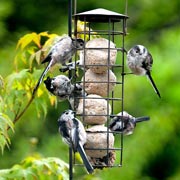 Putting out food suitable for birds is the most simple way to attract birds to a child’s garden or outdoor space. Once the birds recognise and trust it, the new food source will provide a regular stream of pretty, feathered visitors. Children will love knowing they helped to attract these wonderful creatures and have been responsible for giving them a much-needed meal. They can also use
 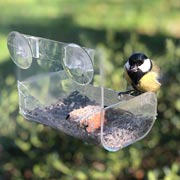 Commercially available ‘Robin peanut cakes’ and ‘sunflower hearts’ are also a big hit with many birds, and can usually be found in supermarkets or online. Whole bird-friendly peanuts are also popular with birds like bluetits and great tits, however, can be a choking hazard for baby birds during the breeding season if not crushed into tiny pieces. More information about suitable food types for birds can be found using the link in the paragraph above.
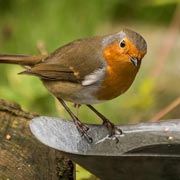
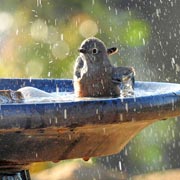 Birds need to drink and bathe themselves, so putting out water in shallow vessels like flowerpot saucers will be welcomed by them. These are best located somewhere a little secluded, e.g. in amongst flowers in a flowerbed or below overhanging shrubs or trees, rather than right out in the open. Otherwise, birds may avoid them as they’ll feel unsafe from birds of prey that sometimes view from high up in the air. If bird baths supplied are on the larger side, birds may bathe in them as well as drink from them. That’s a delight for children to see, so encourage your little one to make one or more bird baths available but also make sure of several things:
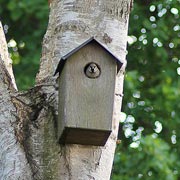 Children will also love seeing birds moving into birdhouses, which families can either make or buy, often inexpensively, and put up around gardens or properties. There are lots of different kinds, for example, blue tit boxes have a hole as an entrance whereas robins require a larger opening. Some research online may be wise and families can decide which type to go for based on what species of birds they wish to attract.
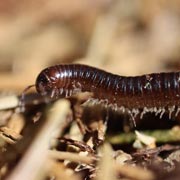 By far the best way to attract minibeasts, apart from ensuring harmful weedkillers and other nasty chemicals aren’t used around the garden, is to give them a compost heap to live in. Such places will attract minibeasts like centipedes, woodlice, millipedes, worms and many other types — perhaps even slow worms. Building a compost heap is a wonderfully worthwhile, fun, and educational activity for children to take part in and our
 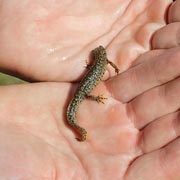 Aside from that, minibeasts and many other types of garden visitors love a wild area of the garden or outdoor space to live in, ideally with ramshackle things like flower pots, rocks, piles of rotting leaves, and rotting logs/branches for bugs, slow worms and other minibeasts to live under. Lizards, frogs, and toads may also be attracted to such areas, particularly if the area is kept damp.
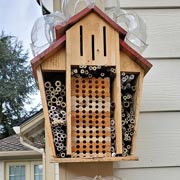 Make or buy a ‘bug hotel’ and place this in the wilderness area too, as it’ll provide a home for all sorts of bugs and insects, including some pollinators like solitary bees, bumblebees, and other minibeasts like ladybirds, woodlice, snails, spiders — even some types of butterfly potentially. Indeed, bug hotels are excellent in autumn as they will provide somewhere safe for the creatures to over-winter and hibernate. The RSPB has
 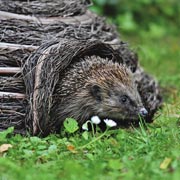 With the right preparation and if children are really lucky, they may even find that adorable little hedgehogs pay a visit. Better still, they may even move in under and raise families of adorable baby hedgehogs if the circumstances are right. Piles of leaves in wild areas, compost heaps in garden corners, unlit bonfire wood stacks, beneath sheds and where there are leaves collecting under undergrowth are all great areas for hedgehogs to stay, particularly if they’re secluded and peaceful areas away from noise, activity, and garden pets like dogs and cats. Ensuring there is a suitable gap under garden fences will also allow hedgehogs to come and go as they please, to forage for food. Ensure they’re not too big, though, if you have a pet.
 Getting children interested in nature, and spending time around it, is extremely good for them as we’ve reported before —