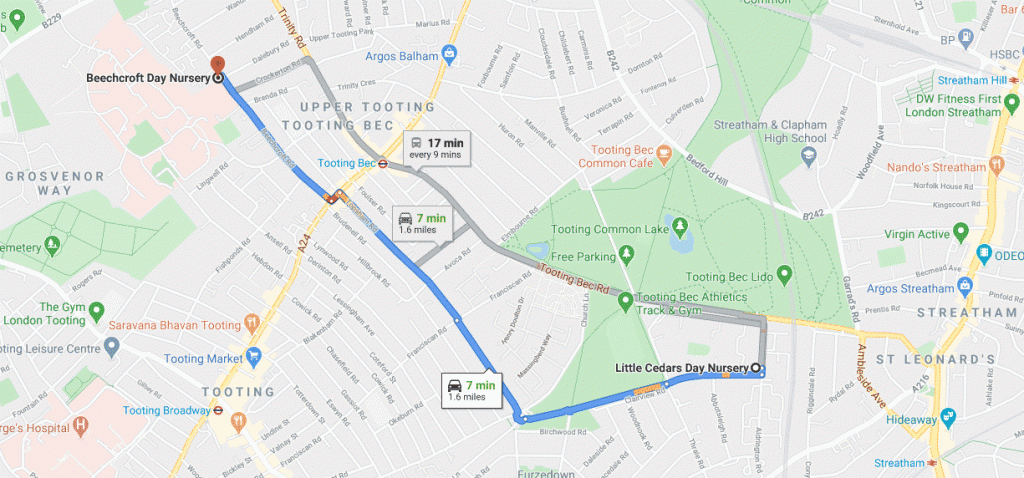
On June 1st, we re-opened Little Cedars Nursery at its Aldrington Road setting in Streatham, London SW16 1TU. Our thanks go to staff at our sister nursery, Beechcroft Nursery, for joining forces with us during the lock-down, to look after children of key workers alongside us. It’s wonderful to be back, though, as we can welcome old faces and new to our Streatham nursery and pre-school.
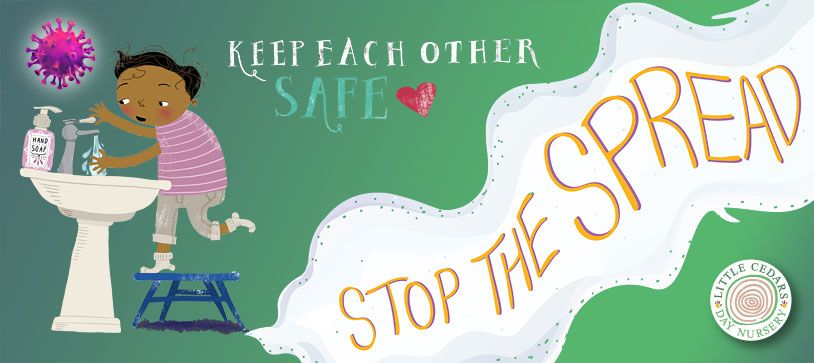
In view of the Government only recently easing the lock-down restrictions and with coronavirus still potentially at large, we have implemented stringent new health and safety measures at the nursery. These are being implemented to safeguard the health and wellbeing of babies, children, parents and staff.
“Everyone’s health is our topmost priority.”
Health & safety measures to keep you & your child safe from COVID-19
Here, we’ll outline what we are doing to keep you, you child and everyone at the nursery safe and well. These measures go well beyond Government guidelines and may be of comfort to those parents who are, understandably, a little nervous of sending their little ones back to nursery or pre-school so soon after lock-down.
Social distancing & extensive use of outdoor spaces
Moving much of the curriculum to our large outdoor areas will significantly reduce the risks that would otherwise be associated with more confined, indoor spaces. Outside, children are naturally going to have more room to themselves and the air they breathe will be cleaner – and will disperse to the atmosphere naturally. And, of course, we are ensuring everyone maintains good social distancing generally. Outside, we have made sure that there are sufficient covered areas outside to protect children and staff from the weather.
Small ‘bubble’ groups
We are also keeping babies and children within small ‘bubble’ groups. This will ensure that they are mixing with only a tiny number of individuals on a day-to-day basis. This vastly reduces the risks of catching contagions from one another. The bubble groups will be a size of 3, 4 or 6 children, depending upon the age group they fall into.
Limited numbers
Another excellent safeguarding measure is to limit the number of people attending the setting. For this reason, we will not take the nursery to full capacity while coronavirus is still at large. Again, this ensures that children and staff mix with as few people as possible.
Temperature checking
Temperatures of staff and children will be checked from time to time, as appropriate, using zero-contact electronic thermometers. That will allow us to get the earliest indication should someone begin to exhibit symptoms. We would then be able to take appropriate action i.e. to ensure that the symptomatic person isolates themselves at home rather than continuing to attend the nursery.
Track & Trace
In the unlikely event that anyone at the nursery does begin to exhibit possible symptoms of coronavirus, we will follow the Government’s Track & Trace policy. Anyone affected will be asked to take a test. They and their ‘bubble’ group will be required to self-isolate until the potential danger has passed. This will minimise the risk of the virus spreading to others.
New drop-off & collection rules for parents
We are asking parents to stagger their drop-off and collection times so that they encounter the minimum number of other people whilst doing so. Parents will not be granted entry to the nursery at the current time, so they must remain outside. While waiting, they will be required to keep a minimum of 2 metres away from others at all times.
New safety protocols for staff
Along with orchestrating the measures above, nursery staff will also be taking additional steps as part of their day-to-day precautions. These include:
- Liberal use of antimicrobial wipes for equipment, surfaces, door handles, toys, etc.;
- A change of clothes when they first arrive at the nursery in the morning, to ensure uniforms are fresh;
- free of bacteria and viruses;
- Wearing of face shields and double-gloving when changing nappies;
- Wearing of top quality, medically approved ‘FPP3’ face masks whenever appropriate.
Special precautions for food and snacks
Our in-house chefs are already taking additional precautions when preparing food for the children. As well as the standard hygiene protocols that one would expect, the new measures include the wearing of masks and face visors when preparing food. This keeps meals and snacks pristine.
These measures put the health and safety of children, parents and staff first. We hope they put your mind at rest if you were at all tentative about your baby or child attending (or re-attending if you’re one of our existing families). Do, of course, get in contact with us if you’d like further reassurance.
Does your baby or child need childcare in the Streatham area?
If your baby or child needs a nursery/preschool place in the Streatham area of south-west London, we would be very happy to discuss this with you. We’d welcome the opportunity of telling you more details about the exceptional childcare services at the nursery, our ethos and all the amazing facilities available. Call 020 8677 9675 or email our manager here. We’ll be delighted to hear from you.
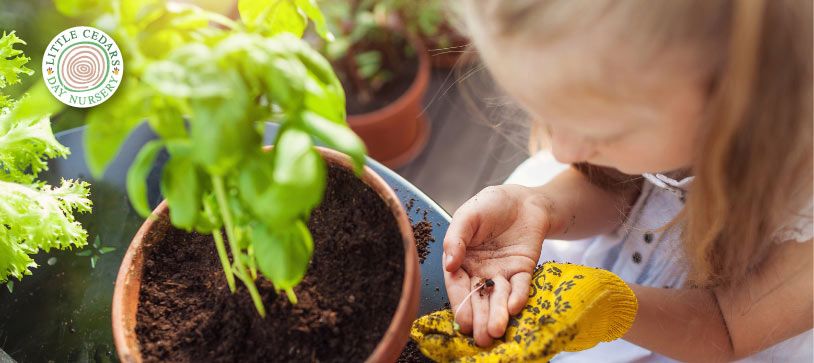
 It may surprise some to learn that you can buy some vegetables and herbs just once and never have to buy them again. The secret is knowing which, and how to re-grow them. It turns out that it’s pretty easy, so we encourage parents to help youngsters get started. Once they see growing shoots or roots and, later, vegetables or herbs that the family can actually eat, they’ll be so pleased that they made this little miracle possible. What’s more, it will have taught them something about where food comes from, how to grow it sustainably and how to look after the living plants. If you’re really lucky, it may even encourage them to take things a step further and get involved in food preparation and cooking later on. It’s amazing, actually, where such a simple, fun, activity can lead!
 It’s possible, and indeed fairly easy, to grow your own produce even without a garden. So long as you look after your plants and give them water, soil and light as a bare minimum, they will grow. If you don’t have a garden, perhaps you have a small courtyard or patio where you can grow in containers. If you don’t have any outside areas at all, you can grow in flower pots and other containers on window sills, balconies, under skylights and so on. This makes growing produce possible almost anywhere, including in urban London in high-rise flats. After all, it’s in a plant’s nature to want to grow.
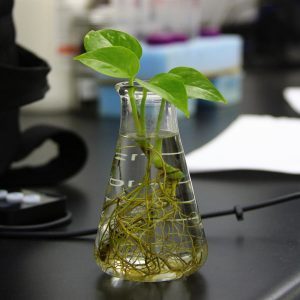 Children could start with green onions or spring onions. These are particularly easy to ‘re-grow’. Later, perhaps, the children can apply the same approach to celery, lemon grass, Cos lettuce and Pak Choy (a type of Chinese cabbage). Simply save an inch or so thick section of your shop-bought root vegetables (perhaps the last you will ever need to buy), which includes the bottom part at the root end. All your children need to do is to place that section, root end downwards, in a glass of water. Leave them in the water and, after somewhere between 1 and 3 weeks, roots will start growing. Children will love monitoring this process each day and they will enjoy looking after and caring for a living thing. Once the roots are substantial enough, children can take them out of the glass and re-pot them in soil, ideally with a bit of compost if you have any. This can be in containers, appropriately sized flower pots or in the garden if you have access to one. Before long, your plants will give your children more, free herbs and vegetables that you can all enjoy.
 Garlic cloves are also incredibly easy to regrow in a similar way. Perhaps at some point you’ve unintentionally allowed your shop-bought garlic cloves to ‘sprout’. Well, that’s how to start off. Rather than discarding them, your children can put them in water and allow roots to grow. Then, they should plant them out in soil and eventually they’ll end up with more, free, garlic cloves. What’s more, they will tend to taste more mild and delicate than shop-bought garlic — children will probably appreciate that. It’s the same with ginger roots, but allow months rather than weeks in their case.
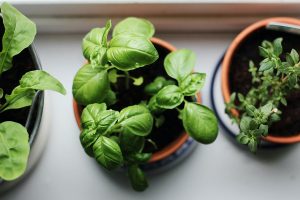 Herbs like Coriander, Rosemary and Basil can also be re-grown. Children can simply take scraps or clippings (4 inches long in the case of basil, 2-3 inches in the case of Rosemary) and place them in glasses of water in a well-lit spot on the windowsill. Once they have sprouted roots of about 2 or so inches long, these young ‘plants’ can be transplanted into soil or compost in pots. Your child will then be able to watch the plants flourish and grow into new herbs that can be harvested for food later on. The children will also soon discover that each of these herbs has a wonderful and distinctive taste and smell.
 Later, when growing sprouts reach the surface, the child should keep those covered with soil (this is called ‘hilling’). Get your child to keep the soil moist but not over-saturated over the subsequent weeks. If planted in the spring, your children should be able to harvest potatoes in the summer.
 Then, of course, your children can also experiment with nursery bought, or mail order seeds. Although not free, they’re reasonably inexpensive and also fun for children to grow if you follow the instructions and timing suggested on the seed packets. Beans of various kinds and sugar snaps are particularly easy to grow and usually result in an excellent crop. They will benefit from being in a garden or outdoor patio area, ideally, due to the space they require. They will need more vertical space than horizontal space, however, so even balcony planting may be possible if you have suitable grow bags.