
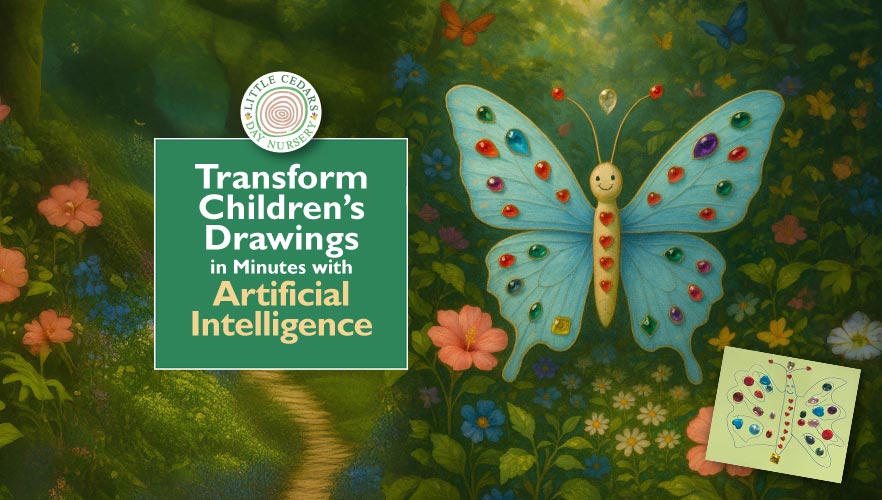
Today’s activity is one that’s fabulous fun for children and parents alike. It’s all about showing children how quick and easy it is to transform their drawings, paintings, and art using Artificial Intelligence (‘A.I.’). With help from a parent, magical results take just minutes to accomplish, and each transformation is often incredible. It’s also clear that the finished results truly honour children’s creations, while simultaneously elevating them to new, highly professional digital art imagery. What’s more, the tools that achieve this are freely available to families via desktop computers and smartphone apps.
Let’s dive in, then, to see how children and parents can take children’s art to magical new heights — easily, and in just minutes. We’ve also included some ‘before’ and ‘after’ images to exemplify what’s possible using the right approach. Parental or adult supervision is, of course, essential, particularly for the youngest children.
Why Introduce A.I. Digital Art Transformations to Children
This activity will encourage children’s art, communication and creative skills, and boost their understanding of today’s world. While some may be nervous about introducing youngsters to A.I., it’s a technology that’s ubiquitous — embedded all around us on computers, smartphones, and countless other devices. Indeed, today’s children are likely to grow up with it being a normal part of their lives. Many will grow up using A.I. daily at home and in the workplace, and some may even end up in a career that involves it. So, what better way to introduce artificial intelligence to little ones than via a responsible parent who has their best interests at heart? Such a parent can closely supervise them and ensure they use A.I. safely and responsibly. With that in mind, today’s A.I. art activity is a simple but fun way to help them see the technology’s potential, and to generate digital art that they can call their own and be proud of. Bringing their art to life in this way will also demonstrate that their imaginations, ideas and creations have enormous potential, are valued, and therefore matter.
Bringing children’s art to life will demonstrate that their imaginations, ideas and creations have enormous potential, are valued, and therefore matter.
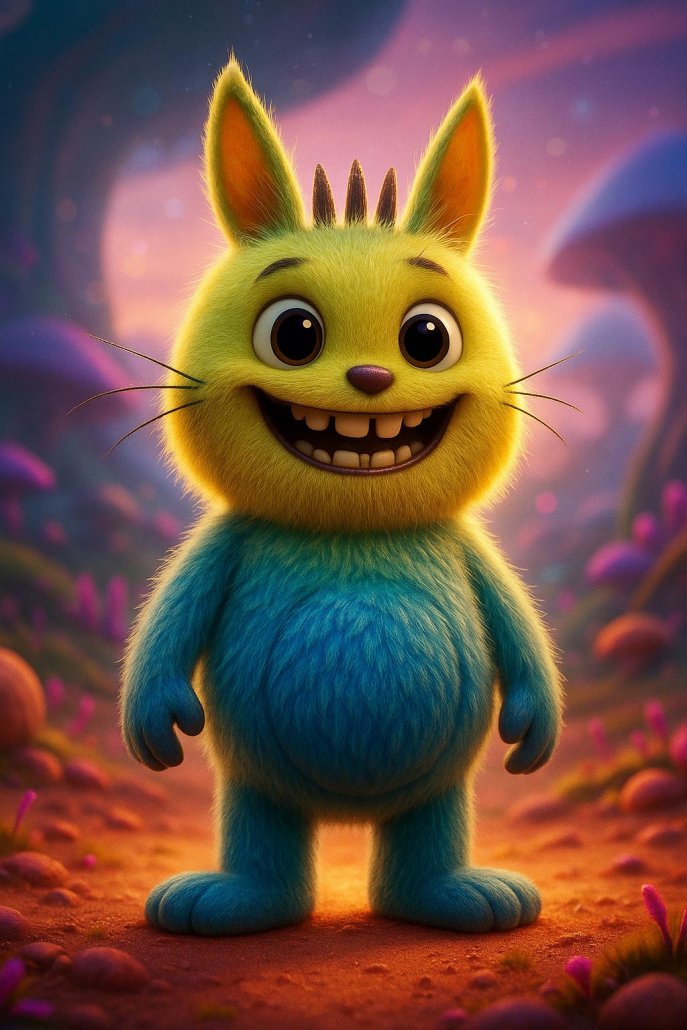
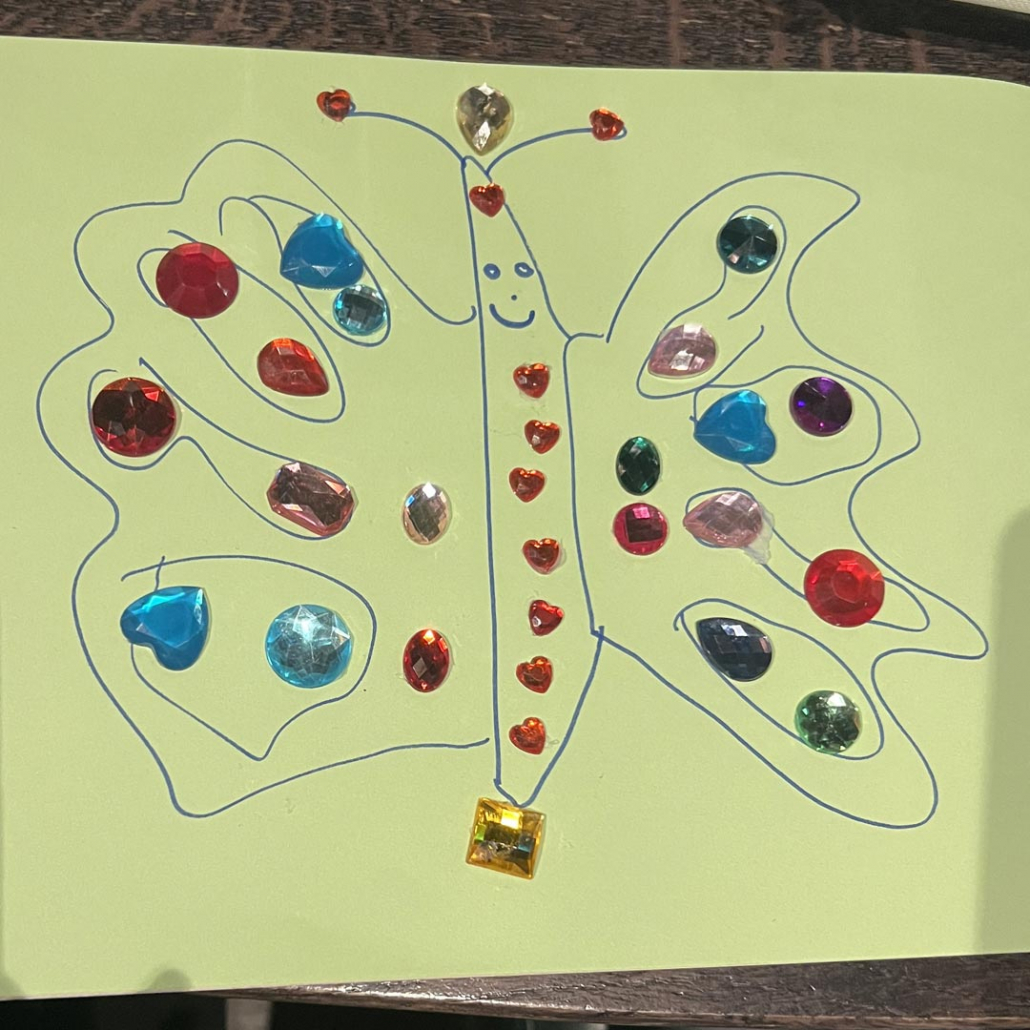
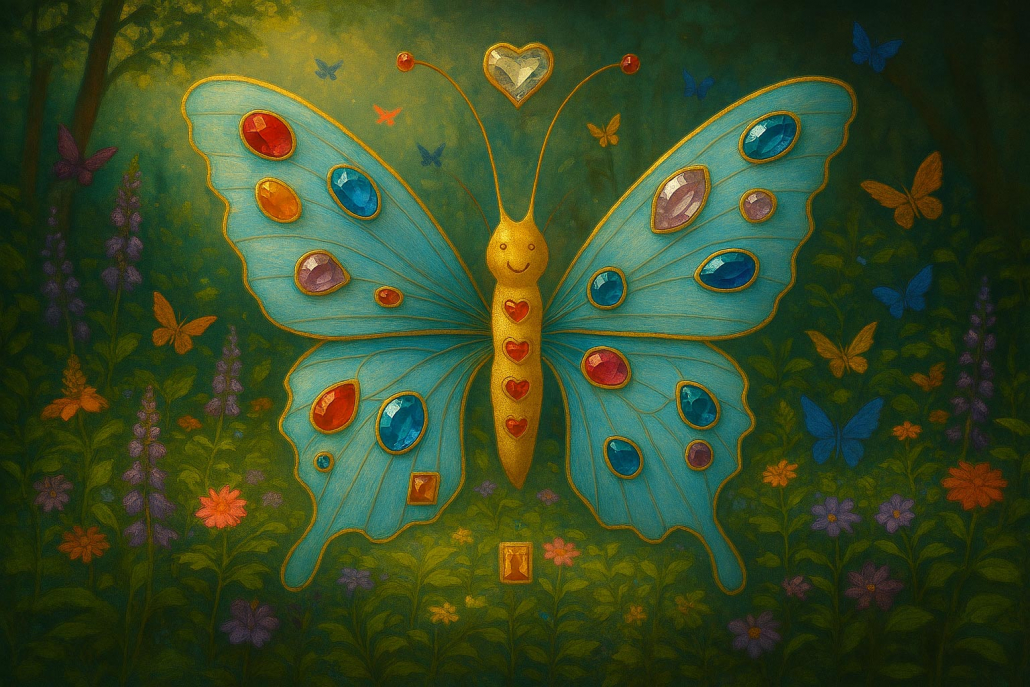
Here’s a clickable gallery showing what’s possible when you ask an A.I. tool to transform a child’s art:
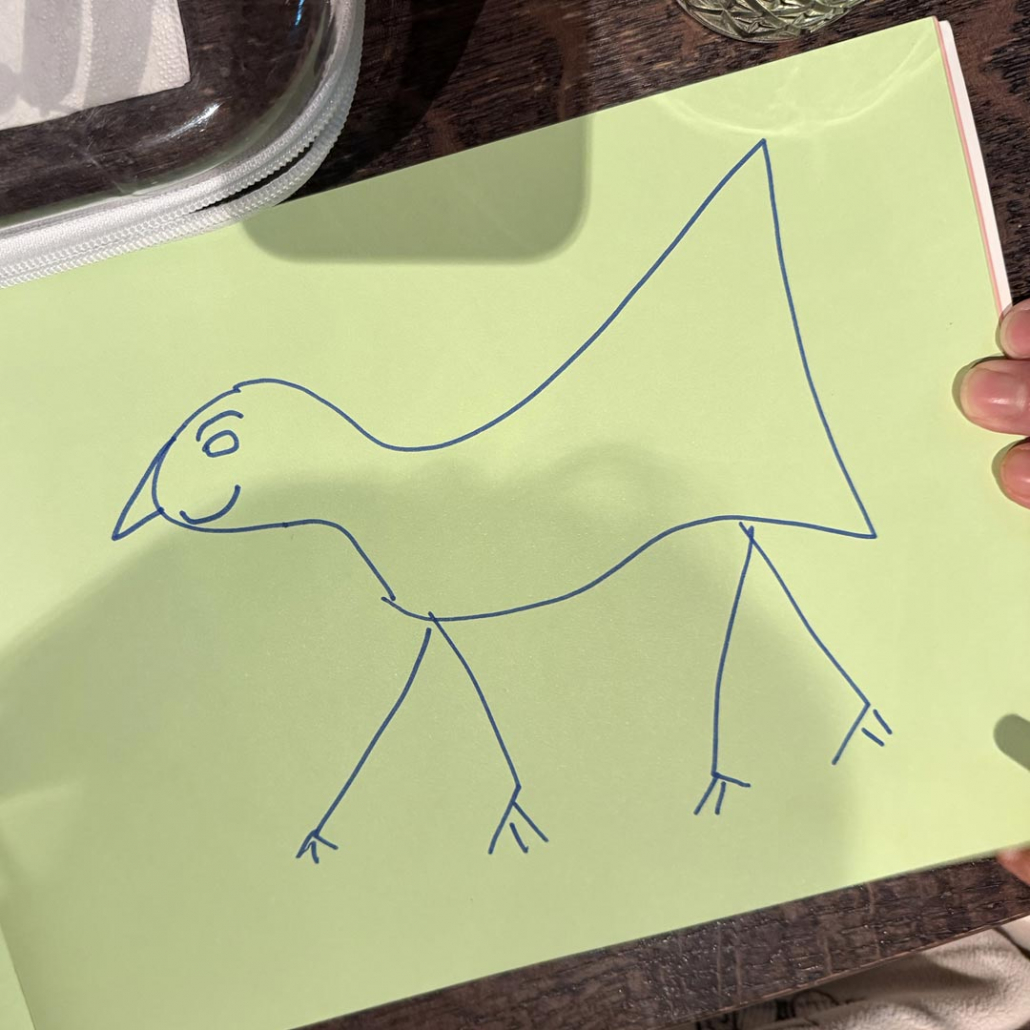
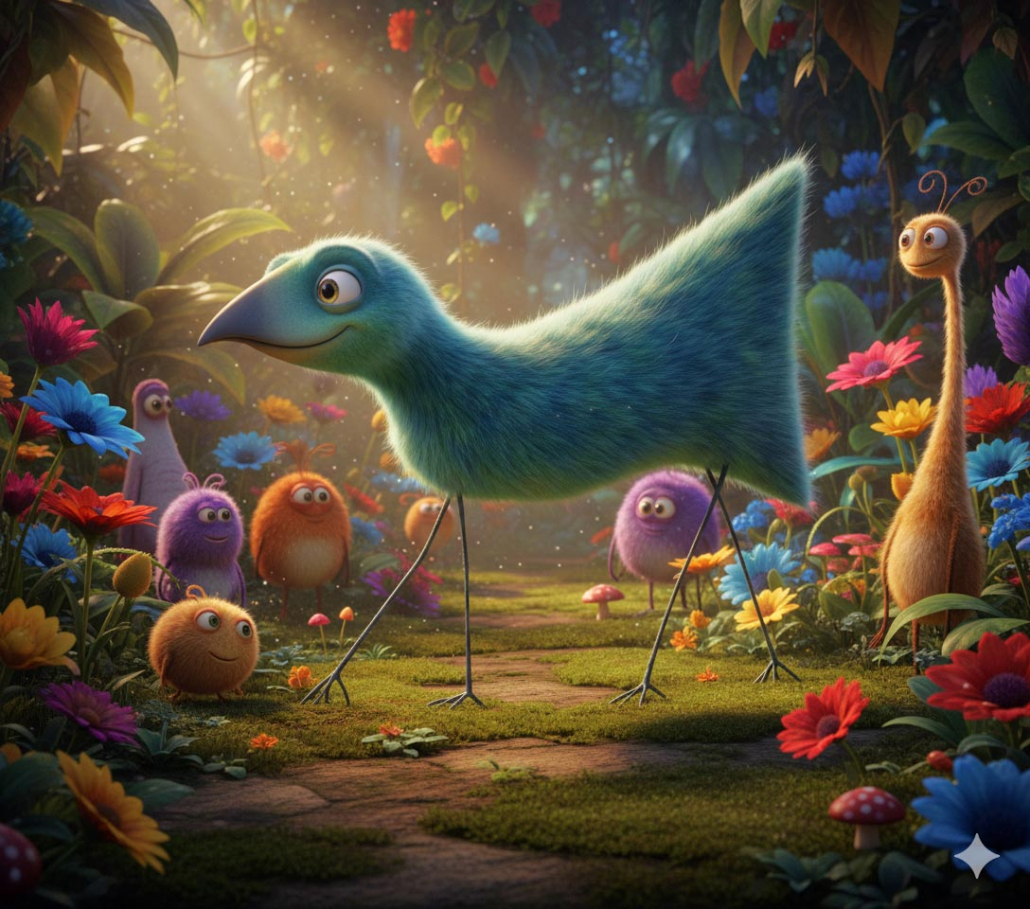
Steps to Incredible A.I. Transformations
Step 1: Make a Drawing or Painting
Step 1 is for children to do what they often do best: draw or paint something on a sheet of paper. If they need some ideas, an image of one or more people, animals, monsters, robots or what they might imagine to be aliens would be a good place to start. They can include anything they like around the main character or focus of the piece, be it a background of a home, forest, mountain scene, alien landscape, or indeed nothing at all — because asking the A.I. tool to insert some kind of background is also something they can do (see Step 4).
Step 2: Photograph or Scan Your Child’s Art
Once the child is happy with their drawing or painting, the parent should scan or take a smartphone photo of the image from above and save it, noting where it’s been saved. Try to avoid casting any shadows across the art when you photograph it, and ensure the results are clear before moving to Step 3.
Step 3: Upload it to the A.I. Tool
The next step is to upload the saved photo to the A.I. tool. For most A.I. tools, this is usually done simply by clicking the + symbol in the chat window of your chosen A.I. tool (more about those below) and selecting the appropriate instruction (upload, or add photos/files, as appropriate). Then, ideally, include your instructions for the A.I. tool within the same prompt or, failing that, immediately after it in your next prompt. See Step 4 below for our recommendations.
Which A.I. Tool?
There are many different A.I. image-generating tools available to families, including powerful ones that are free to use, within certain limits. ChatGPT is perhaps the most well-known and has a fabulous image-generating tool, directly available from the chat prompt via the paperclip symbol (whether via its website or its smartphone app). However, ChatGPT has fairly stringent limitations on the number of image transformations it will produce per hour or day, particularly when the system is busy, and transformations may be a little slower than with some other A.I. tools (paid upgrades are available to reduce some of those limitations).
A good alternative for families to start off with is an A.I. tool that’s less stringent yet more accessible. ‘Copilot’ would be an excellent choice on Windows 11 PCs because it’s embedded into that operating system. Another good alternative would be Google Gemini, which is accessible directly via any web browser by clicking our bold, blue link.
Either way, an image can be uploaded from the A.I. chat prompt by clicking the + symbol, subsequently choosing ‘Upload’ for Copilot, ‘Add photos & files’ for ChatGPT, or ‘Upload files’ for Gemini.
Other A.I. tools are available, but the suggestions above are a good starting place. Parents will need to do their own research around functionality, any image generation limits, possible fees if they want to upgrade, privacy, image ownership, etc.
Step 4: Give the A.I. Instructions
Once your image has finished uploading to the A.I. chat prompt, the next step is to write your instructions, ideally in the same prompt window or, failing that, in the very next prompt that you make. Such instructions tell the A.I. tool what you want it to do with the image you have uploaded. You can give it some simple instructions, which will allow it flexibility to make many of its own decisions, or feed it highly detailed instructions that give you much more control on the final output. Your child can be involved in such instructions, of course, and this can all be a part of the creative fun! Such an option may work best once they’ve learnt what the A.I. tool is capable of doing, having perhaps transformed their first few pieces of art.
What Can You/Your Child Ask the A.I. For?
What you can ask the A.I. tool to do with your child’s drawing or painting is only limited by your (or their) imagination! For example:
- You could ask them to transform it into a cartoon style if you want to keep it simple (for example, in the style of SpongeBob SquarePants or The Simpsons).
- You could ask the A.I. to transform a scribble of a robot into a high-definition one that takes the same form but looks every bit like it’s made of painted metal and resides in a futuristic city.
- You could request a transformation in the style of a Pixar movie. For example, with the main character(s) having shaggy fur, bright colours, all set in the interior of an imaginary spacecraft with illuminated buttons and futuristic furniture.
- Another option would be to request the output to be in the style of clay characters of the kind you’d see in a Wallace & Gromit animated movie.
- Or ask for the final image to be in the style of a wooden puppet, a fabric soft toy like you’d see in a child’s nursery, or indeed something that looks like it is from Toy Story.
- You could perhaps ask for something that looks like your child’s drawn character comes from Sesame Street or The Muppets.
- Be aware that you can also specify the type of lighting (soft, hard, backlit, etc.), what the background should be, what the location is, what style of image it should be, and even whether any elements of the child’s original drawing should be ignored, adapted, or substituted. If you/your child has something in mind, simply tell the A.I. tool.
Step 5: Wait for the Amazing Results!
Once your child’s drawing or painting has been submitted along with the appropriate instructions, it’s a case of waiting a minute or two for the results. Be prepared for a “WOW!” from both yourself and your child when the generated image appears, because the results are usually incredibly impressive. The A.I. tool will have taken the essence of your child’s creation and elevated it to incredible new heights.
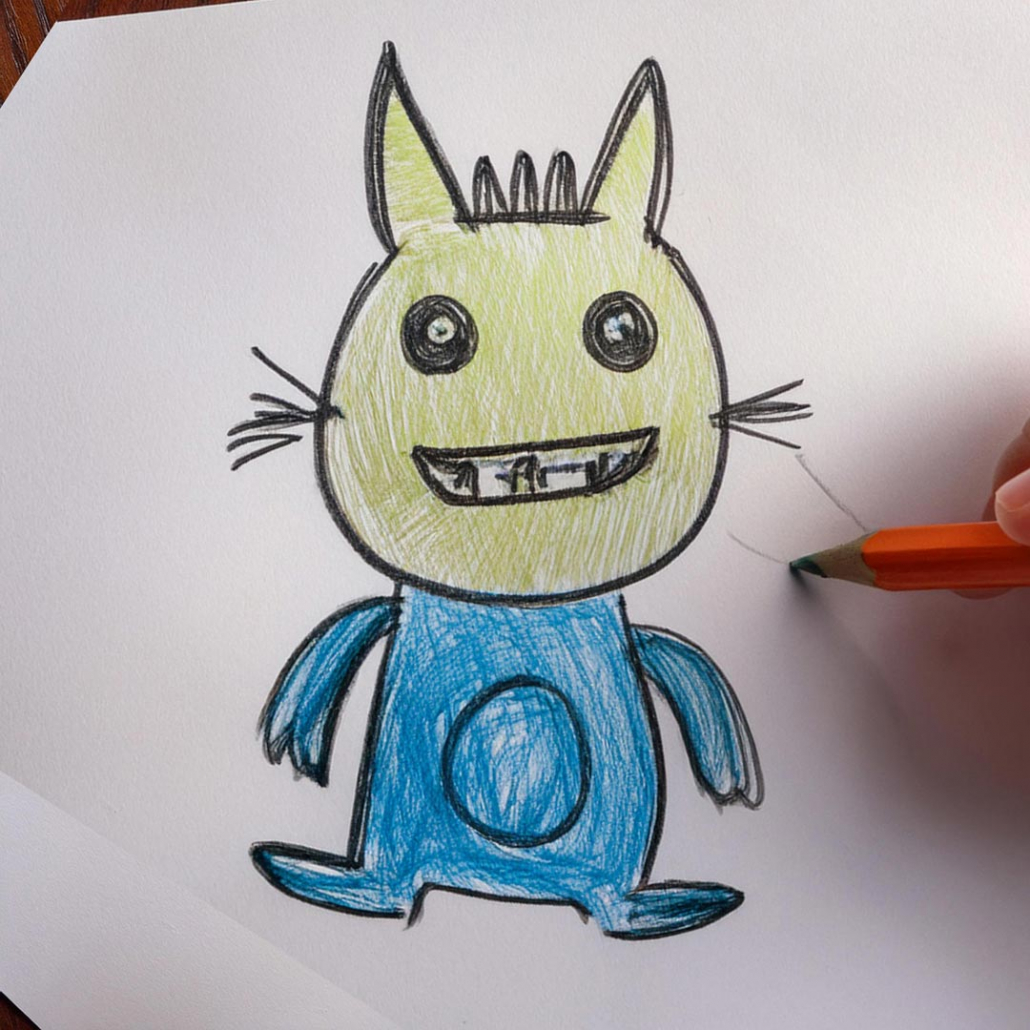
Here are a few more examples, which are clickable for a larger view:
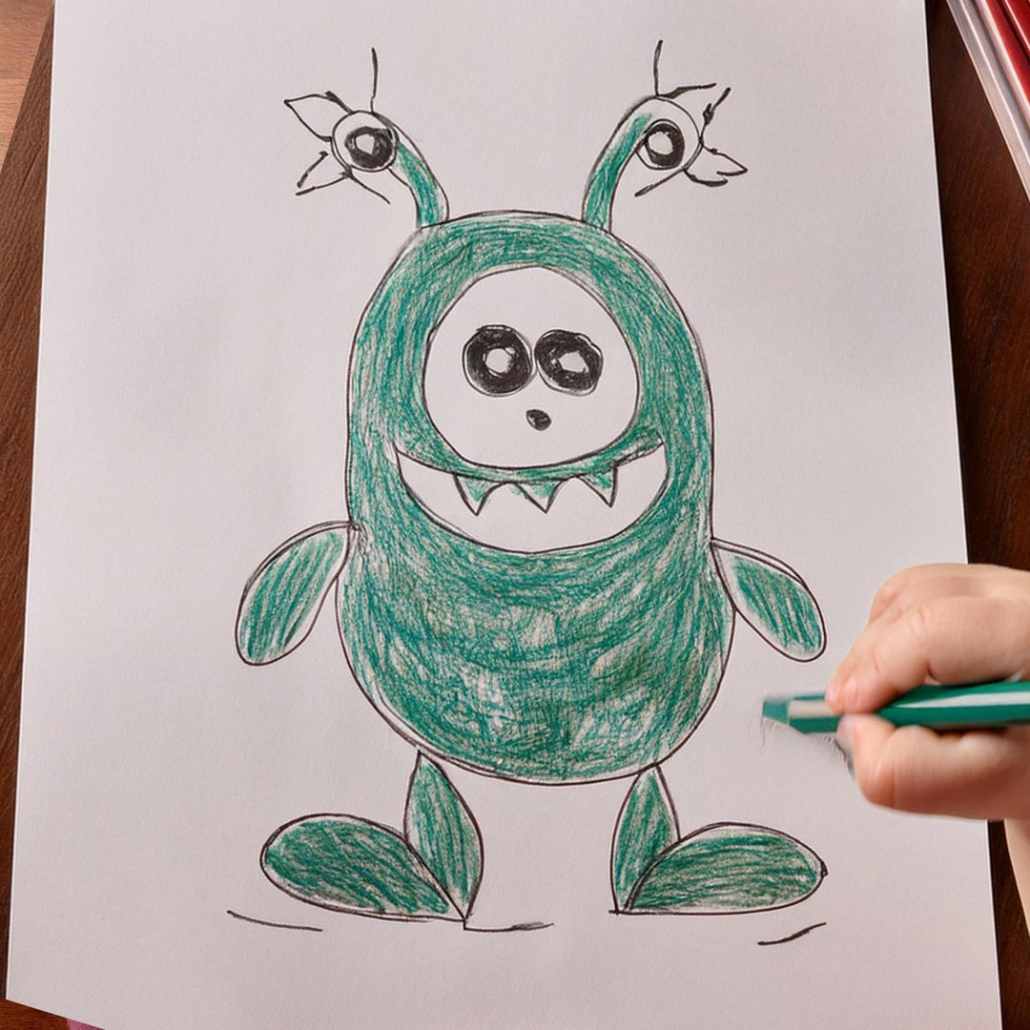
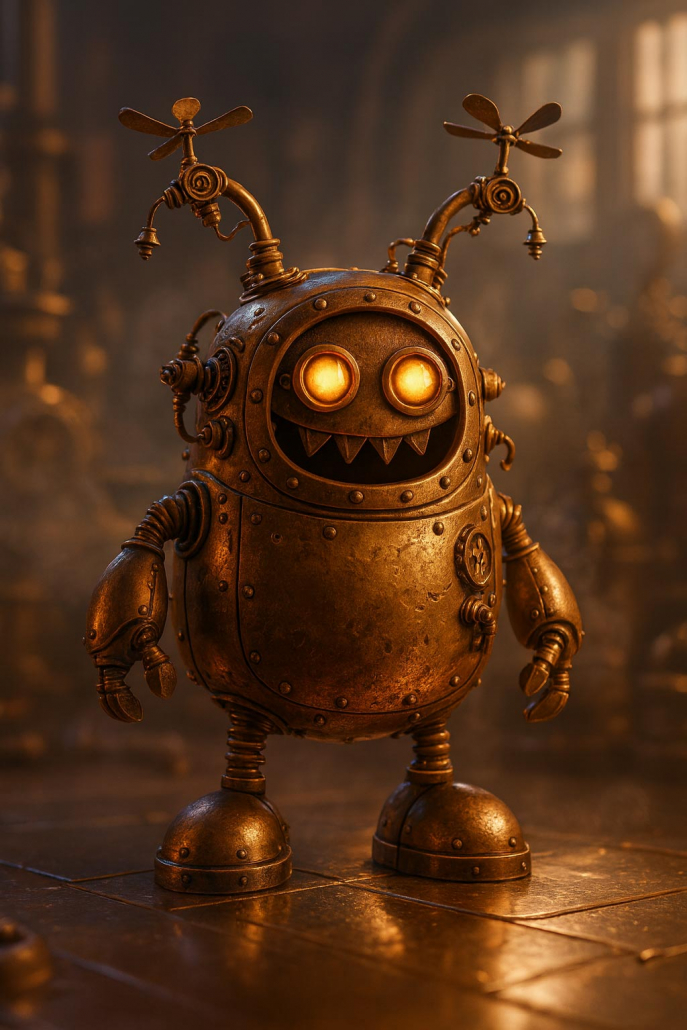
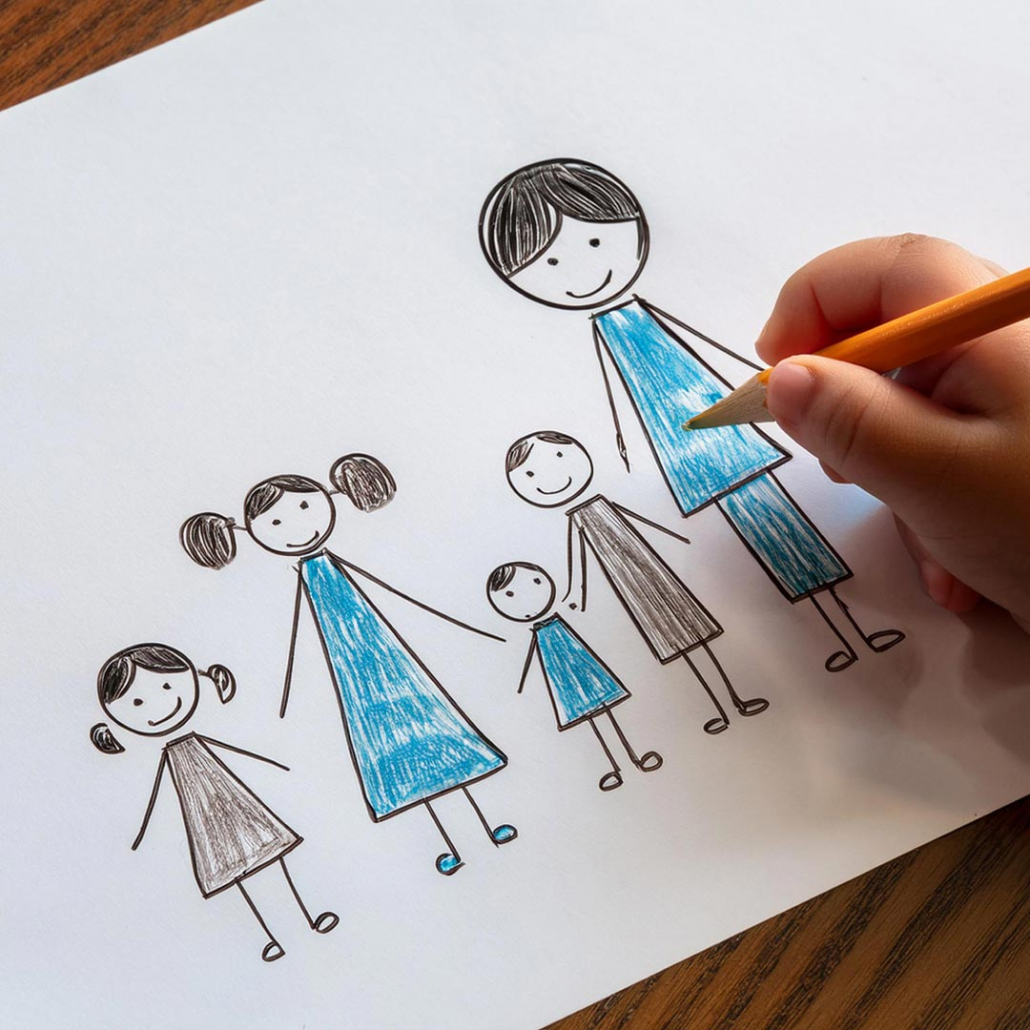
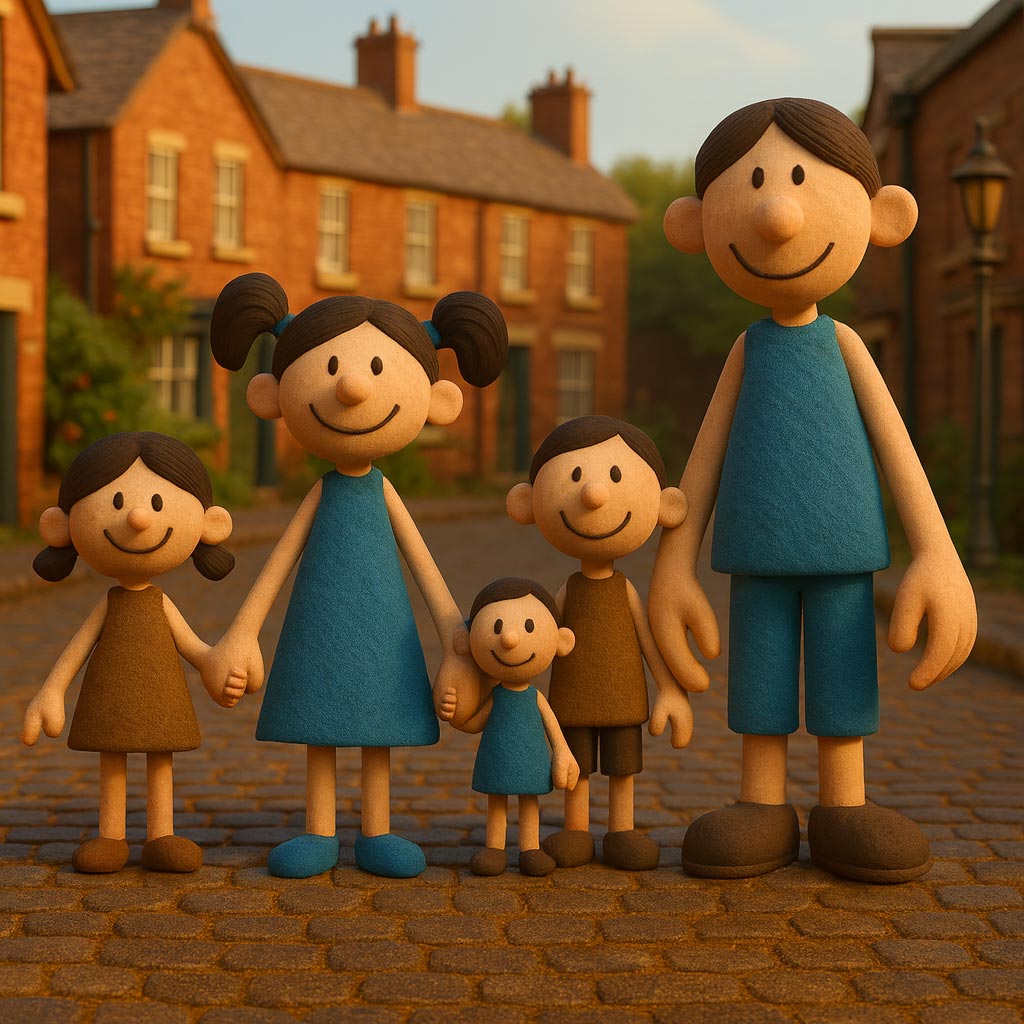
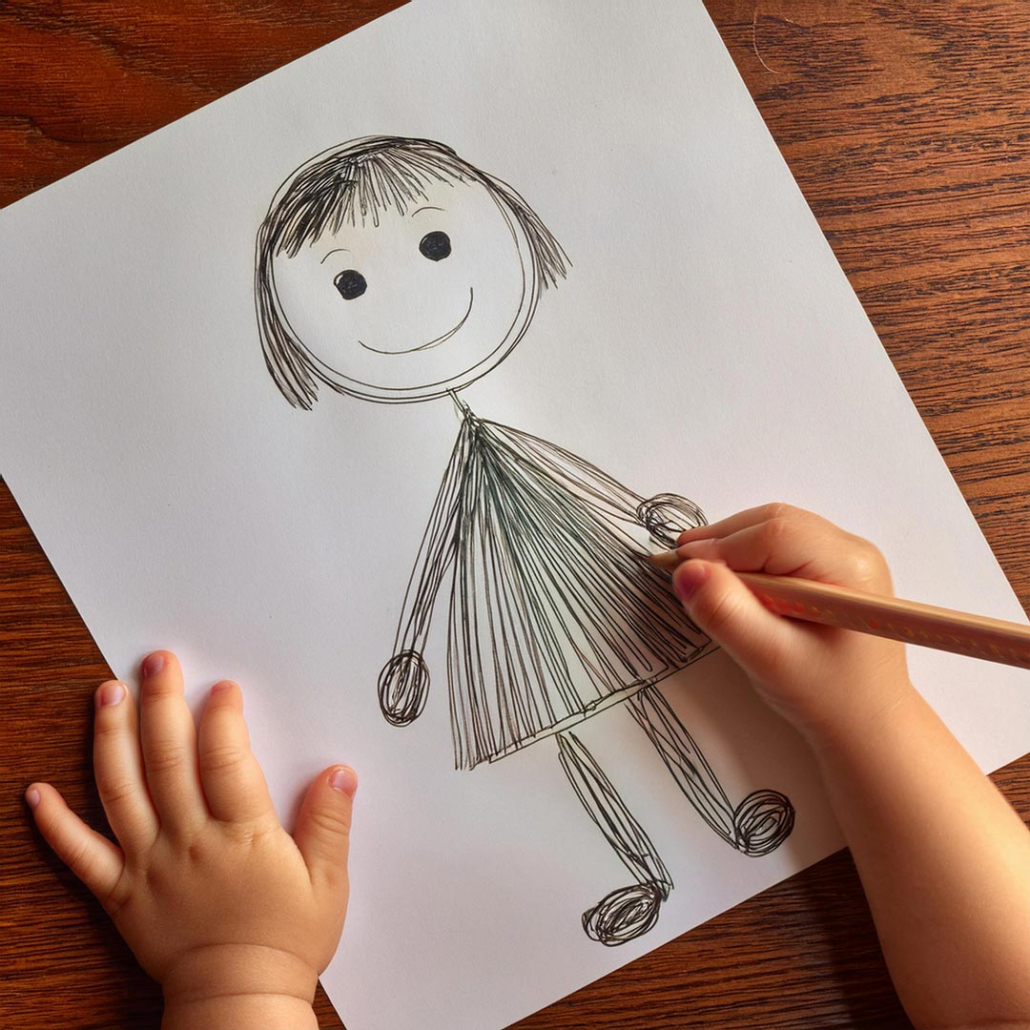
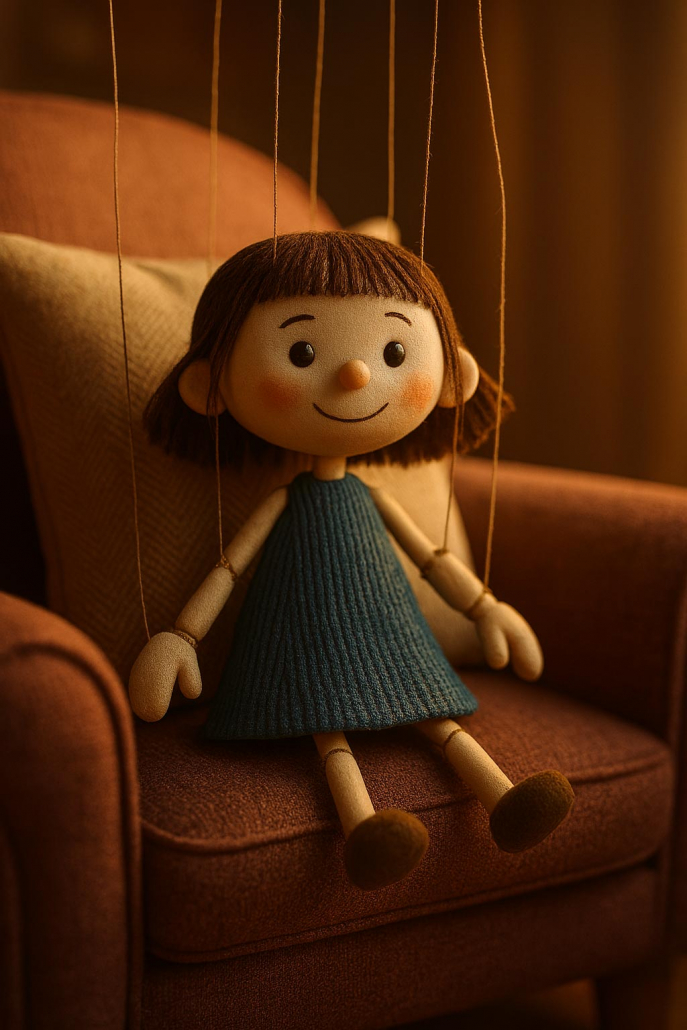
We had the most fun creating today’s post! And, if it’s fun for adults, just imagine how enjoyable children will find the activity. With the help of a parent or carer, they’ll see their creations come to life in incredible ways. They’ll be able to see how simple drawings can be absolutely transformed into high-resolution, highly detailed, professional-looking imagery that would not look out of place in an art gallery, on TV, or in a cinematic movie. What’s more, they can let their imaginations strive for new heights by suggesting exactly how their images should be enhanced. Would they like their drawing to look like a character from The Smeds & The Smoos, something from a Minions movie, more akin to a cartoon character like Peppa Pig, or something that would look at home in a soft toy shop? With today’s A.I., they can let their imaginations run riot, wield truly powerful tools, and reach for the stars to transform their art into truly magical results. It takes just minutes — and can be achieved totally free of charge. After printing out the results or saving the images digitally, children will end up with something they can be proud of. More importantly, though, they will come to understand what magic is possible from something they have imagined and created.
A High-Quality Childcare Service in Streatham
Little Cedars Nursery — Weekday Childcare for Under-5s

 Little Cedars Nursery is a wonderful childcare service in Streatham. The setting may also suit those searching for a good nursery/preschool near Streatham Common, Streatham Hill, Streatham Park, Tooting, Furzedown, Balham, Norbury, or Colliers Wood. Little Cedars Nursery is rated as a good provider by Ofsted, so you know your child will be in good hands. The nursery is warm and welcoming, with a home-from-home environment where children and babies feel safe, nurtured, loved, and valued. We have wonderful, caring staff and all the facilities, equipment, and resources that will ensure under-fives get the best start in life. By doing so, they’ll become the best versions of themselves and will be ready to thrive! Little Cedars Nursery supports free/funded childcare schemes for eligible children and babies.
Contact Little Cedars Nursery today to learn more, register for a place, or book a guided tour:
 Children of the UK, it’s time to get ready for World Book Day! Arriving in early March, it is a wonderful annual event where children across the nation get to immerse themselves in books, storytelling, and other book-inspired activities. Such activities are incredibly important for children. Did you know, for example, that children who regularly read for pleasure are happier children who also go on to have greater success in their lives? This uplift is even more significant for children from disadvantaged backgrounds. Such is the power of reading for little ones! With all this in mind, today’s article outlines more about World Book Day and why it’s so important. It also suggests some activities that children and families can take part in to celebrate this year’s event.
 World Book Day arrives each year on the first Thursday of March. So, for 2025 it’s celebrated on the 6th of March, then in 2026 it’s on the 5th, for 2027 it’s the 4th, and so on. Organised by the charity of the same name, the core mission of World Book Day is “to promote reading for pleasure, offering every child and young person the opportunity to have a book of their own.” The reason is simple: a life-long love of reading for pleasure results in improved life chances. It’s incredibly powerful for children of all ages, as indicated in the following findings from the Organisation for Economic Co-operation & Development:
 The World Book Day® charity published a 17-page impact report for the event that took place in 2024. One of the key findings was that something needed to be done to stop the significant drop in children reading for pleasure. Otherwise, children would be missing out on some profound benefits. The report concluded that there had been several reasons for the downward trend. For example, 20% of children said they felt judged for what books they read. Some said that reading felt more like a chore or ‘work’ because the books were foisted upon them by adults. Just over 8% of children simply didn’t have access to any books at home. Of those that did, over a third said they had no choice over what they read.
 In the UK, children under 18 are eligible to receive a £1 book token through the event. This can be used to buy a special World Book Day title or go towards another book (

 Families: get ready for World Wildlife Day! On 3rd March each year, we celebrate UN World Wildlife Day, an important event that is all about protecting nature’s flora and fauna. At nursery age, little ones are naturally curious and eager to learn more about the world around them. World Wildlife Day is therefore the perfect opportunity to inspire a greater love for nature and wildlife in our young. Exploring the wonders of plants, trees, and the animal kingdom teaches them more about the world and also helps children develop key skills like language, creativity, and empathy. Whether through outdoor play or wildlife-themed activities, engaging with nature’s wildlife can therefore create valuable early learning experiences. With that in mind, today’s post outlines some simple activities that children, including those under five*, can take part in to celebrate World Wildlife Day. We also highlight some of the benefits of nature to children towards the end of the post.
 Getting outdoors is the best way to see wildlife, especially if your family lives near a park or the countryside. Rambles, picnics, and simple walks are all obvious options and, of course, wildlife sanctuaries are a good choice if you have one nearby. That said, while such outdoor options are amongst the best ways for children to connect with nature, sometimes they’re simply not possible. However, when that’s the case, there are plenty of other possibilities including bringing the wonders of wildlife into your nursery, home, or garden. Here are some engaging, age-appropriate activities that will allow children to take part in World Wildlife Day whatever their circumstances:
 Most children naturally take to drawing, so encouraging them to draw wild animals, plants and birds will be a popular suggestion, especially around the time of World Wildlife Day. For example, they could try drawing British mammals like rabbits and squirrels, jungle animals like elephants and tigers, or sea creatures like dolphins and whales. To make it easier, perhaps give them some visual reference to inspire them. They could choose from a variety of media, be it pencils, crayons, paints, or collages — or something entirely different. Playdough or salt dough models are also an option. Children naturally love to create and, once complete, perhaps display their pieces to encourage future progress.
 Reading books about wildlife will introduce children to new animals and habitats. Great options for younger under-fives include ‘Dear Zoo’ by Rod Campbell and ‘Brown Bear, Brown Bear, What Do You See?’ by Bill Martin Jr. (author) and Eric Carle (illustrator). Also, of course, children and families have the option to tell each other made-up stories. They’re a great way to encourage creative thinking and can be approached in a number of different ways. For example, a parent could tell a story first to give the child an idea of
  Try making some simple bird feeders with your children. There are lots of easy ways to make them as outlined in our dedicated guide,
  Create a simple scavenger hunt using pictures, words, or our free nature hunt sheets to encourage children to find different natural objects like leaves, feathers, and pine cones. This activity builds children’s observation skills, gives them deep insights into nature, and instils in them a better appreciation for the environment. Currently, free reference sheets are available for
  Engage children with easy science experiments, like
 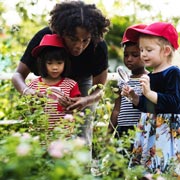 Spending time in nature or learning about wildlife isn’t just fun—it has incredible benefits for early childhood development. To harness such benefits, families can incorporate nature-based learning into children’s routines in a variety of ways. Examples include organising outdoor exploration sessions, setting up small wildlife observation areas, and using nature-themed storytelling to engage the young learners. Connecting children with nature:
 Incorporating wildlife into children’s activities doesn’t have to be limited to one day. Encouraging youngsters to notice the birds in the garden, look for insects on nature walks, or watch the changing seasons can gift them a lifelong love of nature. Parents and families can make wildlife observation a regular habit, perhaps by keeping a simple nature sketchbook where children can draw or glue in pictures of what they see, or by creating a wildlife corner at home with books, nature finds, and small child-safe plants. Even setting up a bird-watching station near a window can turn everyday moments into exciting learning opportunities. By celebrating World Wildlife Day, we can inspire the next generation of nature lovers—one little explorer at a time!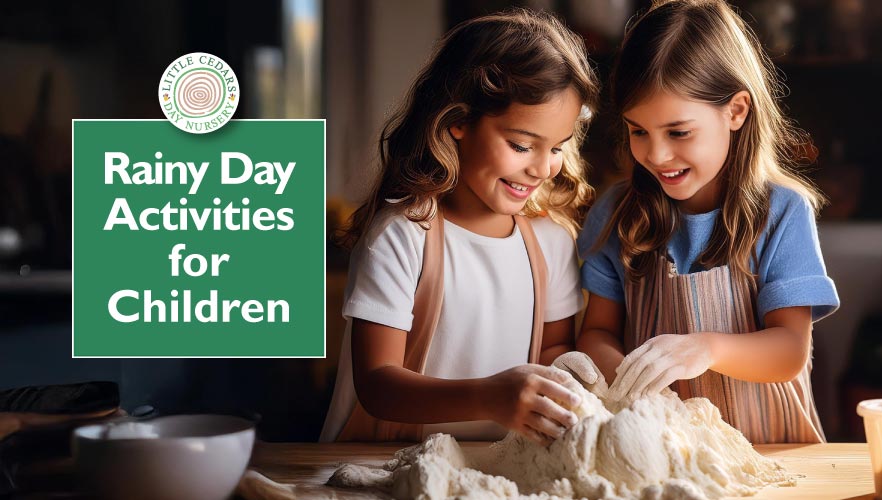
 Transform your living room into a mini adventure zone. If you don’t have existing adventure equipment, perhaps use cushions and make tunnels from blankets draped over furniture. You can also create masking tape ‘routes’ on the floor to mark out an exciting course for little ones to navigate, crawl through, jump over, and balance along. You can add a timer to make it a fun race or include challenges like hopping on one foot or crawling backwards. This is a great way to build gross motor skills while having loads of fun.
 Hide small toys or objects* around the house and give your child simple clues or a checklist to find them. This activity encourages problem-solving and keeps them engaged in an exciting mission. Perhaps introduce themes, for example, a pirate treasure hunt with a ‘treasure map’ or a nature scavenger hunt using items like leaves or toy animals.
 A few sheets stretched over furniture, with blankets, pillows, and child-safe* LED fairy lights below, can create a cosy hideaway. This can be used for storytelling, imaginative play, or simply a quiet space to relax. Encourage your child to bring their favourite books and stuffed animals inside, to make it their own secret retreat. Den building helps encourage creativity, teamwork, and a sense of independence.
 Let your little ones dress up as pirates, fairies, princesses, or superheros and encourage them to act out their own stories. Role-playing helps boost their imagination, creativity, and confidence. Provide props like child-safe* toy swords, wands, or kitchen utensils as pretend play items to expand their stories. Acting out different scenarios enhances communication skills and self-expression.
 Swap traditional paintbrushes for sponges, cotton pads, or even cut vegetable fingers or potato ‘stamps’. Using unusual tools to apply paint allows children to explore different textures and get creative with their masterpieces. You can also use things like leaves, or child-safe kitchen utensils, to achieve different effects. Let them mix colours and discover new shades while experimenting with new application techniques.
 Help your child make their own salt dough with flour, salt, and water. Moulding and shaping salt dough is a great sensory and motor skill activity. While supervising children for safety, provide cookie cutters, rolling pins, or stamps so they can make different shapes and imprints. You can also add child-safe food colouring for extra sensory fun.
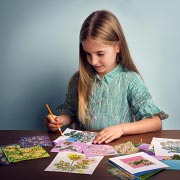 Give your child a mix of stickers, old magazines, and child-safe glue sticks to create their own collage artwork. This is a great way to develop fine motor skills. Set up themes such as Under the Sea or Space Adventure to inspire their creativity. When finished, perhaps display their artwork on the fridge or a wall to encourage pride in their work and nurture their sense of achievement.
 A large cardboard box can become a rocket, a car, or a house with just a little imagination. Provide crayons or water-based markers and stickers for decoration and let their creativity take over. You can cut out* windows, and doors, and even make a steering wheel for them. Encourage storytelling by asking them where their box creation will take them.
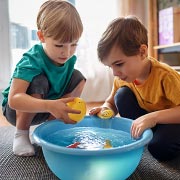 Closely supervising* children for safety, fill a washing-up bowl with water and let them guess whether different objects will sink or float. This simple science experiment is both educational and fun. You can extend the activity by discussing why some things float and others sink, teaching basic physics in an engaging way.
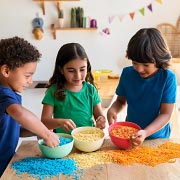 Dye dry rice or pasta with child-safe food colouring for a colourful, ‘scoop-able’ sensory play activity. Once the dye has dried, provide spoons, cups, and small containers for pouring, scooping, and mixing. This activity helps develop fine motor skills while being visually stimulating.
 (While supervising children*): mixing flour with baby oil or vegetable oil will create a soft, mouldable
  Freeze fruit like strawberries, orange segments, or suitably sized small toys in ice. Once you have removed them from the freezer, let children “rescue” the fruit and objects from the ice by using warm water and spoons. This activity promotes patience and problem-solving skills with a scientific twist. You can add child-safe food colouring to the water before freezing for a more visually engaging experience.
 Provide ready-made bases, tomato sauce, cheese, and toppings for kids to assemble* their own mini pizzas. Encourage them to arrange toppings into faces, pictures, or patterns, making the activity both fun and delicious.
 Applying icing and sprinkles to cookies or biscuits makes for a fun and tasty decorating activity. Let children experiment with different patterns and colour combinations, encouraging creativity and hand-eye coordination.
 Let children choose their ingredients and blend* fruit with milk or yoghurt to make delicious and nutritious drinks. If they’re old enough, are closely supervised, and it’s safe for them to do so, let them help with mixing. Once the smoothie mix is ready, use fun paper straws or cups to make it feel like a special treat.
 Play your children’s favourite tunes and have a dance-off! A dance party is great for burning off extra energy indoors and it’s immense fun. Children can swirl paper ribbons or strands of coloured tissue paper for added fun and movement when they dance. Dancing helps children stay fit and is also good for honing coordination, balance, and motor skills.
 Musical statues and musical chairs are classic games that never fail to bring laughter and excitement to a rainy day. Add fun challenges like dancing in slow motion or pretending to dance like a robot and it’s sure to be a big hit with kids!
 Create shakers using rice or dried pasta in bottles — or use pots and pans as drums, perhaps using a wooden spoon. Encourage your child to form their own mini band. Different materials and a range of cardboard boxes or Tupperware-style tubs will allow children to experiment with a variety of possible sounds. It’s very creative!