
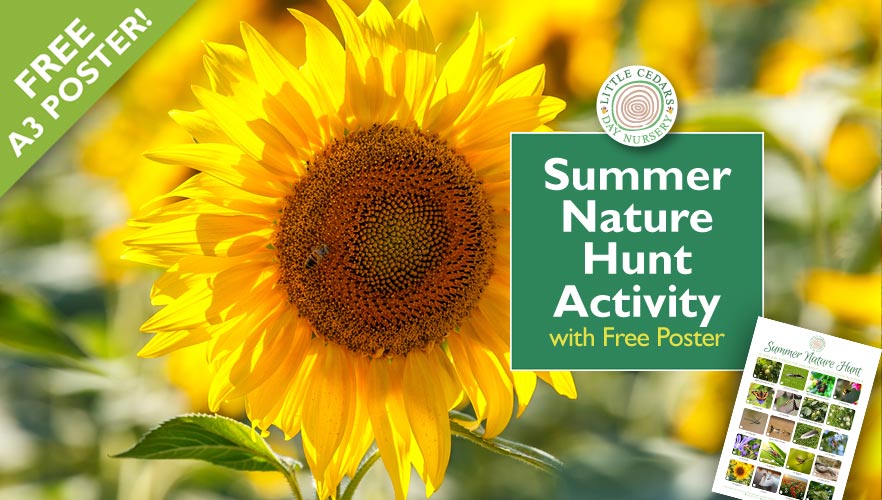
 Summer is in full swing from late June until late September*. It’s a wonderful season that brings with it many amazing things for children and families to look out for in nature. Indeed, that’s what today’s suggested activity is all about. We’ve created a free-to-download poster that highlights 20 things from nature that children, including under-fives, can look out for when they’re outdoors†. Whether it’s in gardens, on walks with family members, at the park, or out in the countryside, summer’s natural wonders are incredibly abundant when you take time to look.
How many of the wonderful flora and fauna can your child spot? Some, like bees and butterflies, will be super-easy to spot. Others, like sunbathing birds and — for the very lucky few — slow worms, may be a little harder to discover. Searching is part of the fun, though, and this nature-based activity is a great way to get little ones to open their eyes to the natural world around them whilst also enjoying exercise and fresh air. It’s a great opportunity to encourage little ones to spend time outdoors, close to nature† — which is so incredibly good for them! Why not download the free Summer Nature Hunt activity poster today and see what you and your little one can spot?
* When Exactly is Summer?
According to the astronomical calendar, for 2025 summer starts in the UK on Saturday 21st June, which is the Summer Solstice — the longest day of the year. It continues until Monday 22nd September 2025, which is the Autumnal Equinox. That’s the time in the year when day and night are of virtually equal length because the sun is right above the equator. Dates vary a little from year to year, however, because the solstice and equinox will fall on slightly different days.
In contrast, summer always spans the calendar months from the 1st of July, through August, until the 30th of September according to the meteorological calendar. This calendar is used more for things like weather forecasting.
Download Your Free ‘Summer Nature Hunt’ Reference Poster
Click the preview image below to view or download the free Summer Nature Hunt reference poster (2MB, Acrobat PDF format). Print it out at any size up to A3 in high resolution. Use your printer’s best paper and settings for the best results.
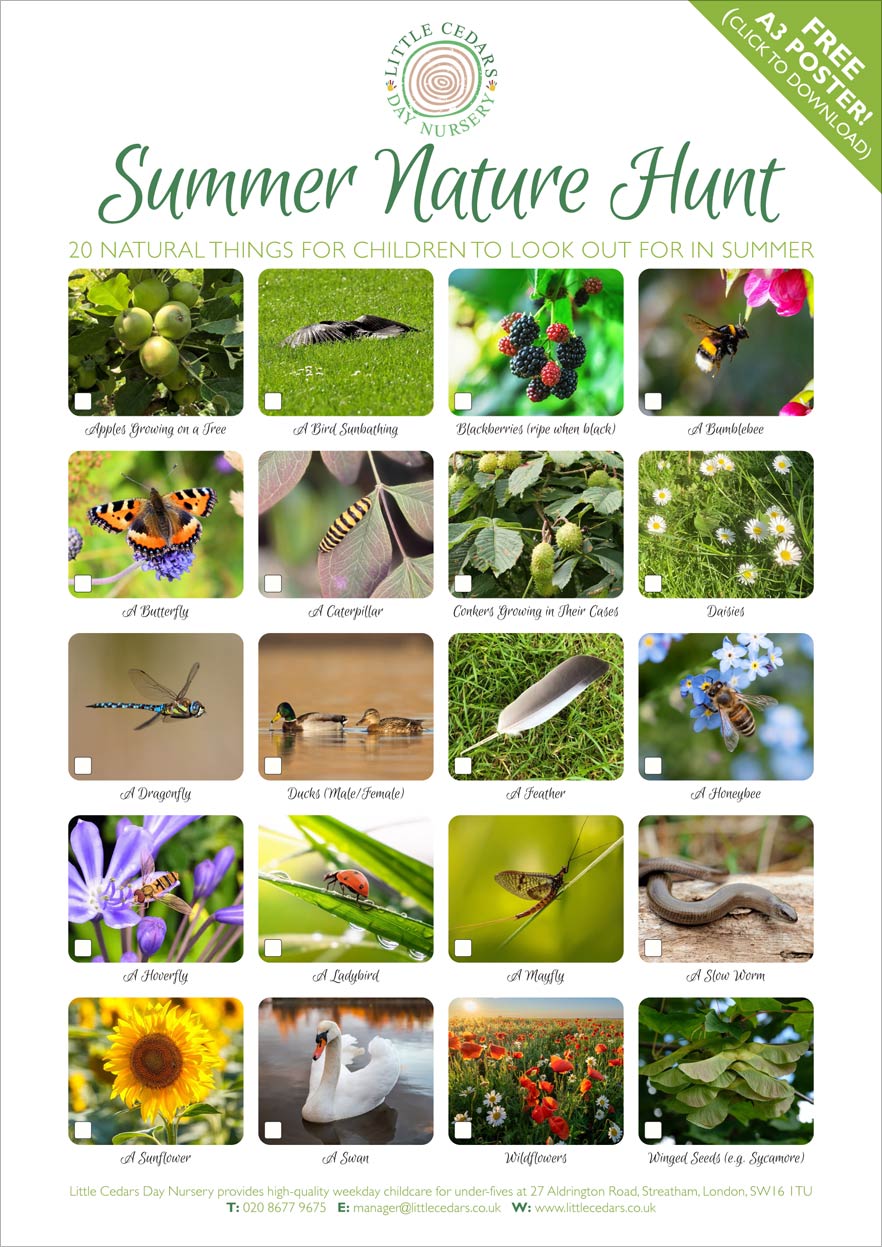
There are many species of some of the creatures shown, so your child does not need to find one that’s absolutely identical. There are 51 species of mayflies, for example, each of which will look a little different. Similarly, there are over 40 different ladybirds and 59 species of butterflies in the U.K. — the variety of nature is incredible!
“Look Don’t Touch!”
Remember that children should look but not touch; the idea is to spot natural things, not to try to collect them or to interfere with living creatures who are going about their business. That’s a safety and well-being issue as much as anything — for both the child and nature’s flora and fauna. The idea is for children to simply see how many they can see when out and about. Then, when spotted, they can perhaps tick them off using the little tick boxes provided on the poster.
Have Fun Little Explorers — Nature is Good for You!
We hope today’s free poster and the activity idea give children and families some educational fun outdoors this summer. Spending time outdoors in the fresh air, close to nature, is incredibly important to children and adults alike. It benefits them in an amazing variety of ways, from greater motor skills and improved problem-solving to enhanced well-being and reduced stress just for starters. And did you know that even academic grades are improved when children spend time closer to nature? That’s just one of the many benefits of nature that you can learn more about here.
Other Nature-Themed Posters for Children
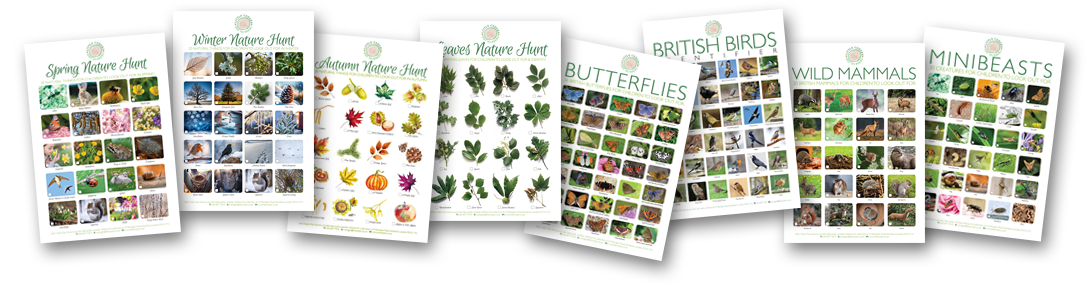
Today’s Summer Nature Hunt poster is just one in a whole series of nature-based activity posters that families can download free of charge. Other posters in the series include a Spring Nature Hunt, a Winter Nature Hunt, an Autumn Nature Hunt, a Leaves Nature Hunt, Discover British Butterflies, British Bird Spotting, Wild Mammal Spotting, and a Minibeast hunt. Visit our blog area regularly for more free stuff for kids! Click the bold blue links for more information.
Opportunities to be Close to Nature at Little Cedars Nursery, Streatham

 Children get to enjoy nature at Little Cedars Nursery in Streatham too! We know how important spending time in and around nature is to children. So, we’re lucky to be close to natural open spaces like Tooting Common and to have our own planting area. Here, children can nurture seedlings, grow flowering plants that attract pollinators, and harvest their own vegetables. They love it! It teaches them so much about the world, where food comes from, the importance of taking responsibility for another living thing, and all the time teaching them new skills.
Little Cedars is a fabulous nursery located in Streatham near Streatham Hill and Streatham Common, conveniently close to those in Tooting, Furzedown, Balham, Norbury and Colliers Wood. Rated as a Good Provider by Ofsted, you know your child will be well looked after and nurtured at Little Cedars. It’s a warm, welcoming, home-from-home environment where children feel safe, well cared-for, and valued. If you’d like your baby, toddler, or preschooler to have the best start in life in readiness for school, consider Little Cedars Day Nursery for your weekday childcare needs. We would love to show you and your little one around, so you can see for yourself the wonderful environment for under-fives.
Get in touch today to register for a place, request a tour, or ask a question — we’re here to help!
† Outdoor Safety
It goes almost without saying that children, especially the youngest, should only explore outdoors under appropriate and close adult supervision. Read our tips for child safety outdoors for more safety inspiration.

 May’s World Bee Day is a wonderful and very worthwhile International event. It’s also one that’s perfect for children, including under-fives, to get involved in. Not only does it raise families’ awareness of the importance of bees and pollinators, but it’s also a great opportunity to introduce little ones to some of nature’s adorable little creatures and get them more interested in the natural world.
 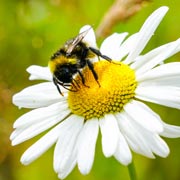 World Bee Day arrives on the same date each year — the 20th of May. The annual event celebrates bees and other pollinators and the important role they play in the world. Without them, there would be no food crops, fruit, vegetables, or nuts, leaving animals — including humans — in real mortal danger. The event also raises awareness of the plight and dwindling numbers of bees and other pollinators around the world, shining a spotlight on ways to reverse their decline.
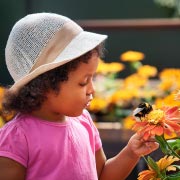 Children naturally take to planting seeds, tending seedlings as they grow, and watering plants and flowers. That’s great because it gives many opportunities for
 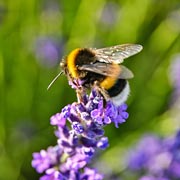 Wherever there are flowers, children will find bees, particularly if the flowers are brightly coloured and fragrant. A walk around the local neighbourhood, park, or natural open spaces will be both great exercise and an opportunity for little ones to spot some lovely bees and pollinators. Getting outdoors (appropriately supervised* and dressed) is beneficial to children in many ways, and a bee-spotting walk will be a simple way to introduce them to these important and cute little creatures. Can they spot a bumblebee? Can they spot a bee collecting nectar in their leg pouches (also known as pollen baskets or corbiculae)? Which
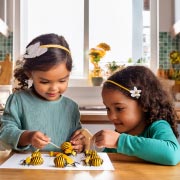 If the weather is unsuitable for outdoor activities, one of the easiest bee-related activities that children can take part in is making bee art. They can try drawing bumblebees, flowers, and hives with pencils, pens, or markers. Alternatively, they can get even more creative using paints or collages. Cutting up coloured tissue paper shapes and making bee-related images using appliqué is sure to be fun and impressive (child-safe scissors being used by parents or under super-close supervision). Parents can perhaps cut out any tricky shapes for the youngest children and then help guide them as they glue bee, flower, or hive elements into place.
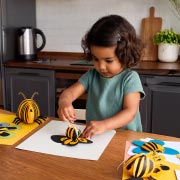 Bee art can be extended further by creating three-dimensional models and shapes. With a little help from parents or older siblings, even children under five can take part. They will enjoy sticking shaped paper or cardboard pieces and other recycled materials into place to form three-dimensional bees and flowers. Useful materials for such models could be things like corrugated card, tissue paper in various colours, coloured pipe cleaners, fabric, kitchen roll cores, paper plates and cups and, of course, coloured paints to decorate the final piece. Such creations can be as simple or complex as families like. This is a great activity to boost fine motor skills and hand-eye coordination!
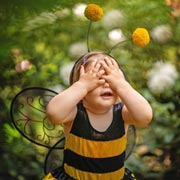 Children can get into bee-inspired fancy dress while doing their waggle dance! Striped clothes will help. Perhaps parents can help them make wings from card or material and shaped wire. Some antennae should not be too difficult to make from a headband, some pipe cleaners and some homemade pom-poms or foam balls from a craft shop. Children will love such creativity and the fun that ensues with friends once they’re all dressed up!
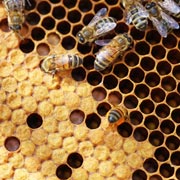 The bee-related activity ideas suggested in today’s post will be a fabulous way to introduce children to these magical little creatures, the wonderful work they do for us and the planet, and the measures little ones can take in their own lives to improve the plight of the natural world. The activities will also be fun and educational — indeed supporting many areas of
 Families: get ready for World Wildlife Day! On 3rd March each year, we celebrate UN World Wildlife Day, an important event that is all about protecting nature’s flora and fauna. At nursery age, little ones are naturally curious and eager to learn more about the world around them. World Wildlife Day is therefore the perfect opportunity to inspire a greater love for nature and wildlife in our young. Exploring the wonders of plants, trees, and the animal kingdom teaches them more about the world and also helps children develop key skills like language, creativity, and empathy. Whether through outdoor play or wildlife-themed activities, engaging with nature’s wildlife can therefore create valuable early learning experiences. With that in mind, today’s post outlines some simple activities that children, including those under five*, can take part in to celebrate World Wildlife Day. We also highlight some of the benefits of nature to children towards the end of the post.
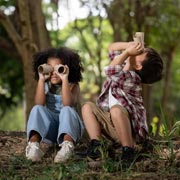 Getting outdoors is the best way to see wildlife, especially if your family lives near a park or the countryside. Rambles, picnics, and simple walks are all obvious options and, of course, wildlife sanctuaries are a good choice if you have one nearby. That said, while such outdoor options are amongst the best ways for children to connect with nature, sometimes they’re simply not possible. However, when that’s the case, there are plenty of other possibilities including bringing the wonders of wildlife into your nursery, home, or garden. Here are some engaging, age-appropriate activities that will allow children to take part in World Wildlife Day whatever their circumstances:
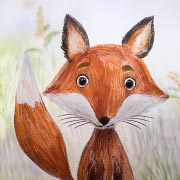 Most children naturally take to drawing, so encouraging them to draw wild animals, plants and birds will be a popular suggestion, especially around the time of World Wildlife Day. For example, they could try drawing British mammals like rabbits and squirrels, jungle animals like elephants and tigers, or sea creatures like dolphins and whales. To make it easier, perhaps give them some visual reference to inspire them. They could choose from a variety of media, be it pencils, crayons, paints, or collages — or something entirely different. Playdough or salt dough models are also an option. Children naturally love to create and, once complete, perhaps display their pieces to encourage future progress.
 Reading books about wildlife will introduce children to new animals and habitats. Great options for younger under-fives include ‘Dear Zoo’ by Rod Campbell and ‘Brown Bear, Brown Bear, What Do You See?’ by Bill Martin Jr. (author) and Eric Carle (illustrator). Also, of course, children and families have the option to tell each other made-up stories. They’re a great way to encourage creative thinking and can be approached in a number of different ways. For example, a parent could tell a story first to give the child an idea of
  Try making some simple bird feeders with your children. There are lots of easy ways to make them as outlined in our dedicated guide,
 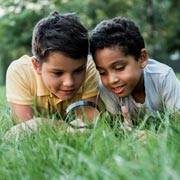 Create a simple scavenger hunt using pictures, words, or our free nature hunt sheets to encourage children to find different natural objects like leaves, feathers, and pine cones. This activity builds children’s observation skills, gives them deep insights into nature, and instils in them a better appreciation for the environment. Currently, free reference sheets are available for
  Engage children with easy science experiments, like
 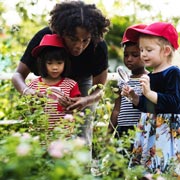 Spending time in nature or learning about wildlife isn’t just fun—it has incredible benefits for early childhood development. To harness such benefits, families can incorporate nature-based learning into children’s routines in a variety of ways. Examples include organising outdoor exploration sessions, setting up small wildlife observation areas, and using nature-themed storytelling to engage the young learners. Connecting children with nature:
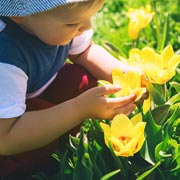 Incorporating wildlife into children’s activities doesn’t have to be limited to one day. Encouraging youngsters to notice the birds in the garden, look for insects on nature walks, or watch the changing seasons can gift them a lifelong love of nature. Parents and families can make wildlife observation a regular habit, perhaps by keeping a simple nature sketchbook where children can draw or glue in pictures of what they see, or by creating a wildlife corner at home with books, nature finds, and small child-safe plants. Even setting up a bird-watching station near a window can turn everyday moments into exciting learning opportunities. By celebrating World Wildlife Day, we can inspire the next generation of nature lovers—one little explorer at a time!